Rockville, MD · Garage Door Service
Garage door repair for Rockville homes built mostly in the 1960s and 70s, serving Derwood, Redland, North Bethesda, and nearby Montgomery County neighborhoods.
What We Do
From a snapped spring to a full door replacement - one local crew, upfront pricing.
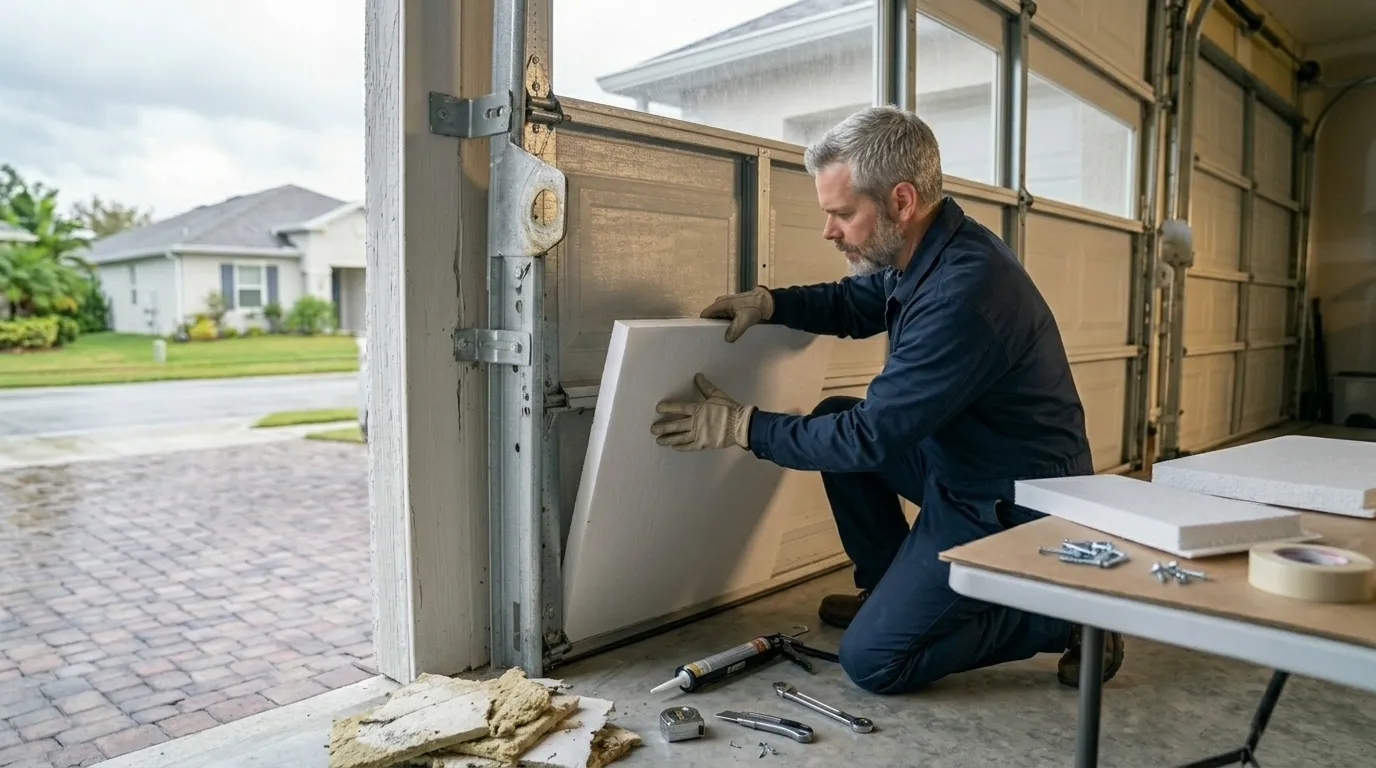
Off-track doors, snapped cables, bent panels and grinding openers - diagnosed and fixed.
Learn more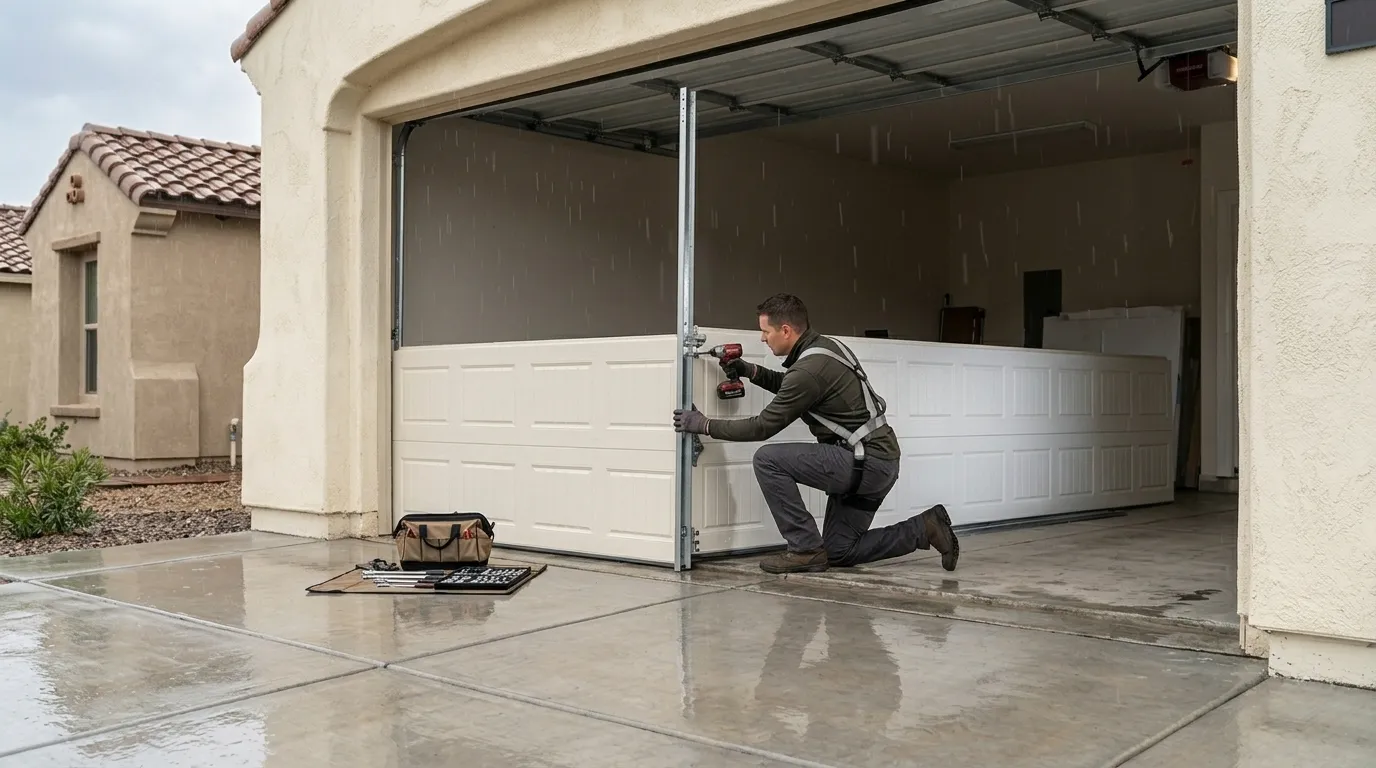
Doors jumped the track re-set, aligned and re-tensioned so they run true.
Learn more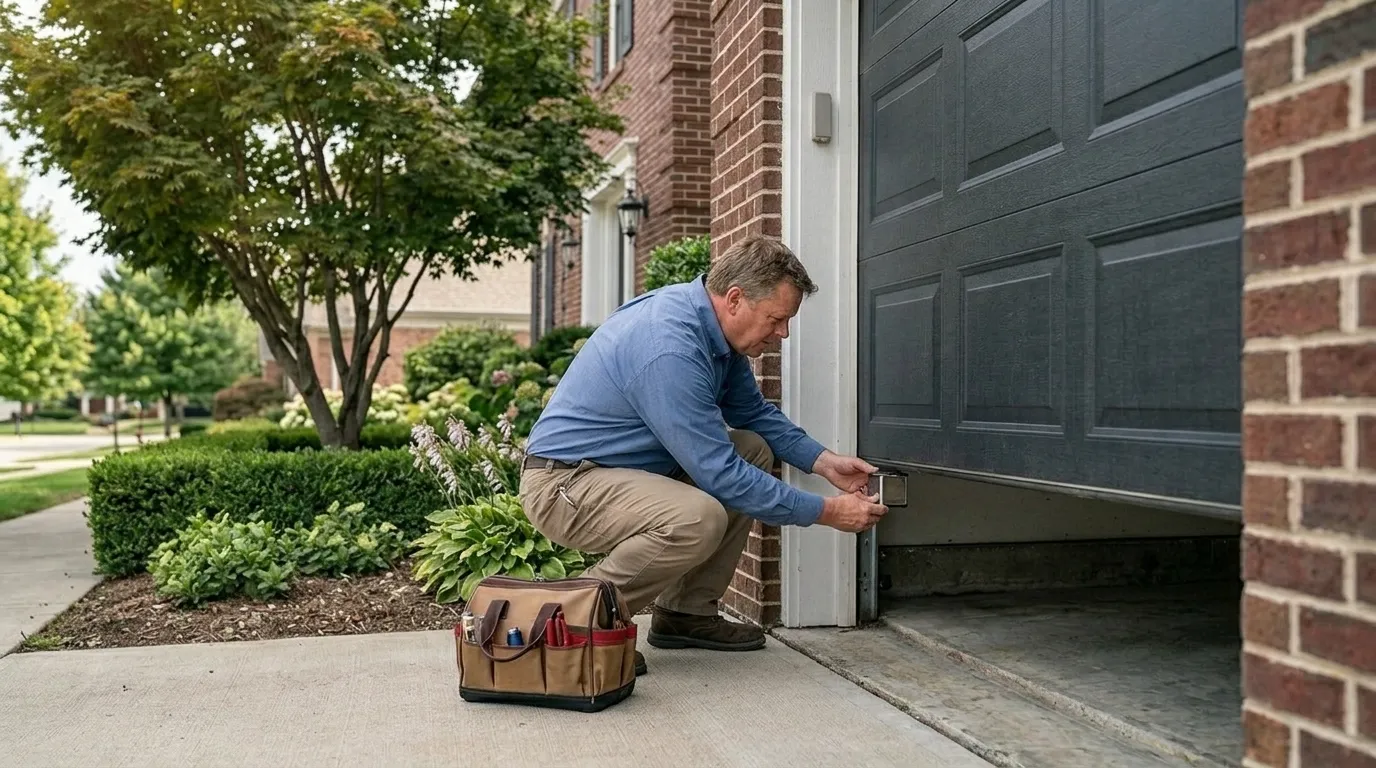
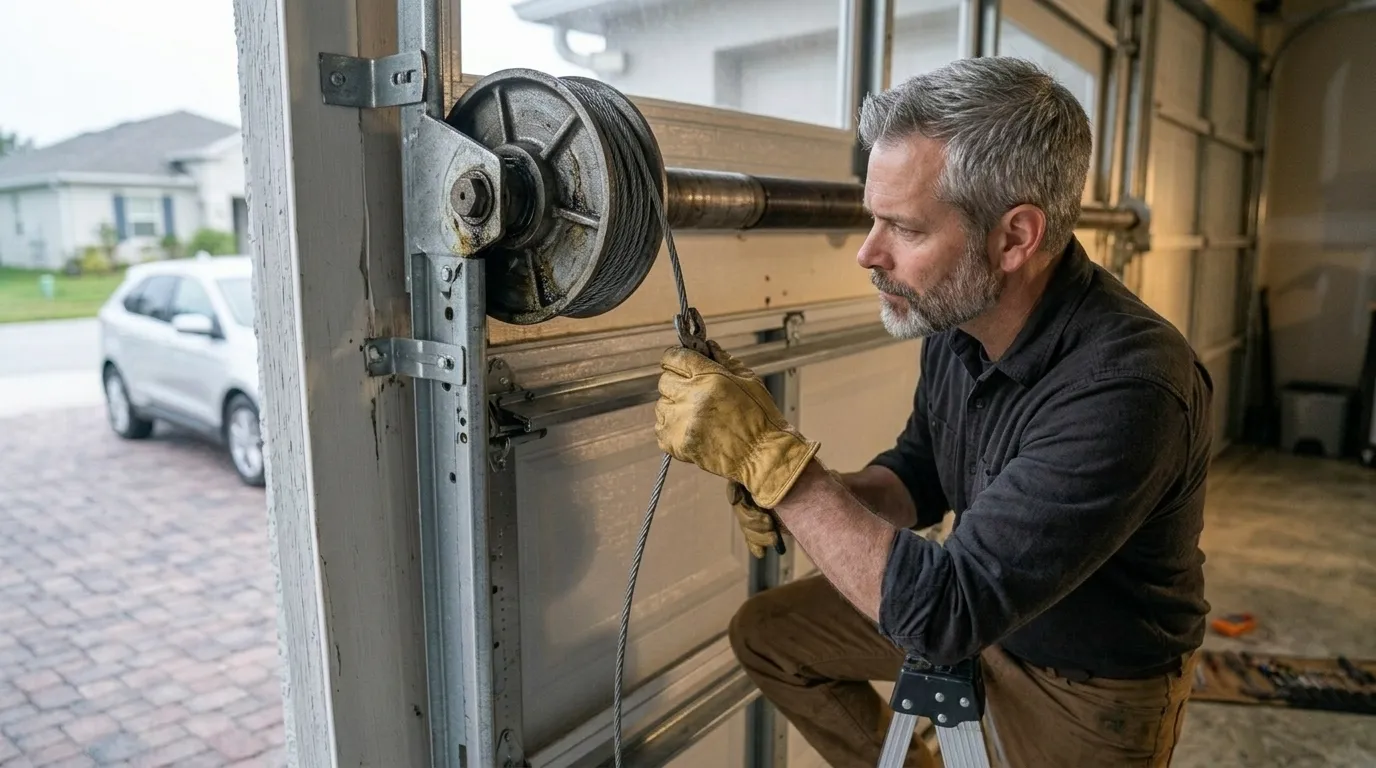
Frayed or snapped lift cables replaced and balanced against the springs.
Learn more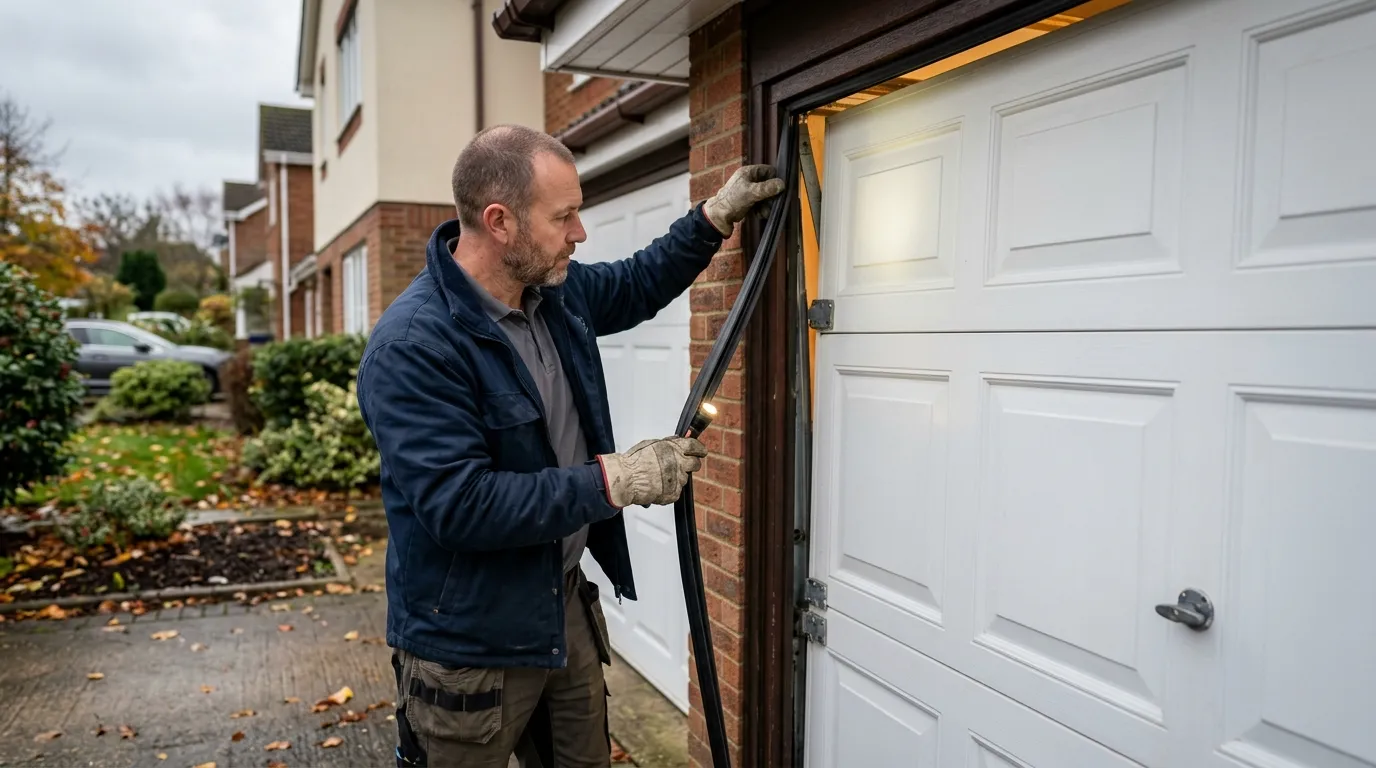
24/7 same-day help for a door that's stuck, off-track or won't secure.
Learn more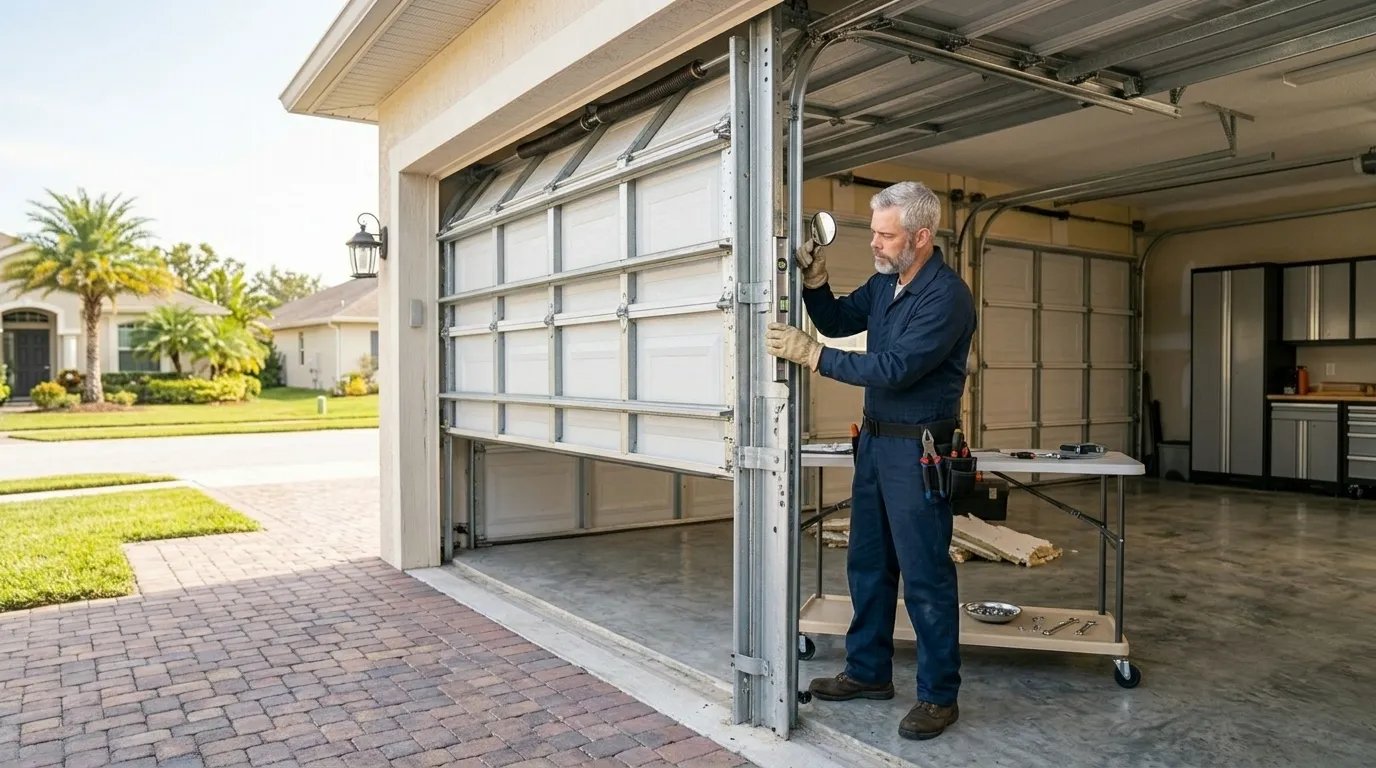
Spring tension, roller and track service that keeps an older door running quiet.
Learn more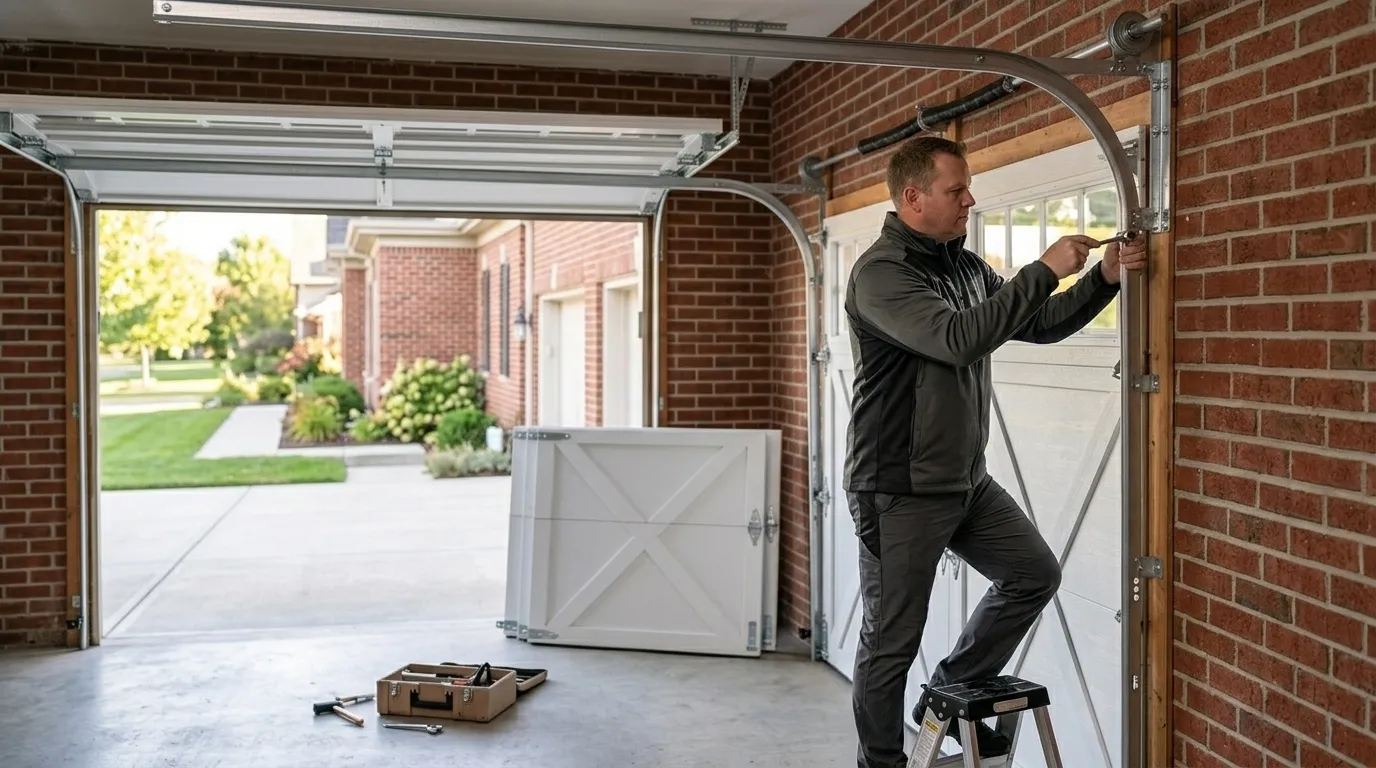
Rockville homes built between 1948 and 2014 carry original hardware sized for a different era. We install doors matched to this housing stock and this cold climate.
Learn moreFast Response
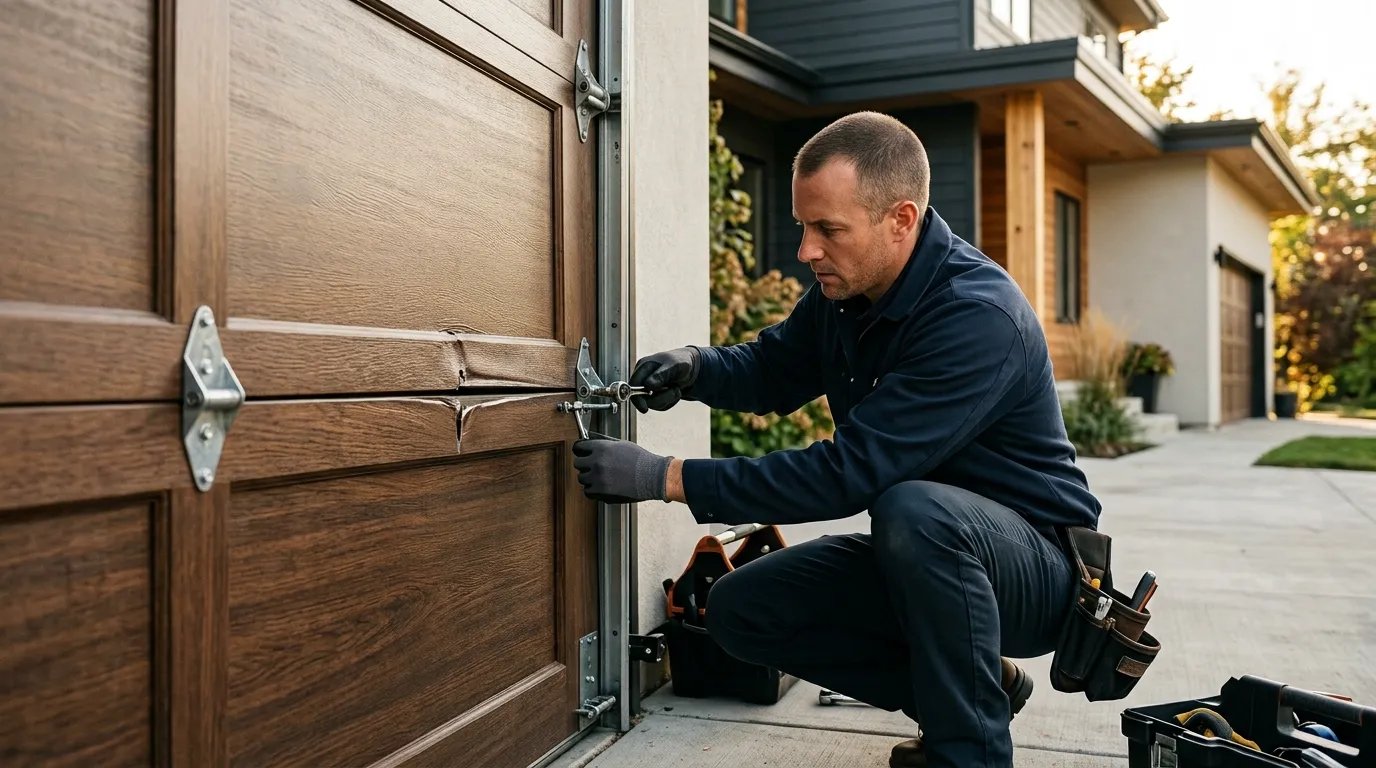
A stuck or broken garage door can't wait. Call before the afternoon and we can usually be out the same day - most repairs are diagnosed and finished on the first visit, with an upfront price before any work starts.
 Same-day service
Why Rockville Calls Us
Most repair calls are handled the same or next day - springs and openers don't wait.
Trained techs, proper spring tools, and the insurance to back the work.
A written quote at the door before any work starts - no surprise add-ons.
We diagnose the actual cause, not just the symptom, so the door stays fixed.
Fully stocked trucks mean most repairs are finished on the first visit, no second trip.
A Rockville-based team you can reach directly, not a national call center.
How It Works
Call or request a quote and describe what the door is doing - noise, off-track, won't open.
A tech inspects the springs, tracks, opener and panels and gives you a written price first.
Most repairs are done on the same visit; installs are scheduled around you.
Our Work
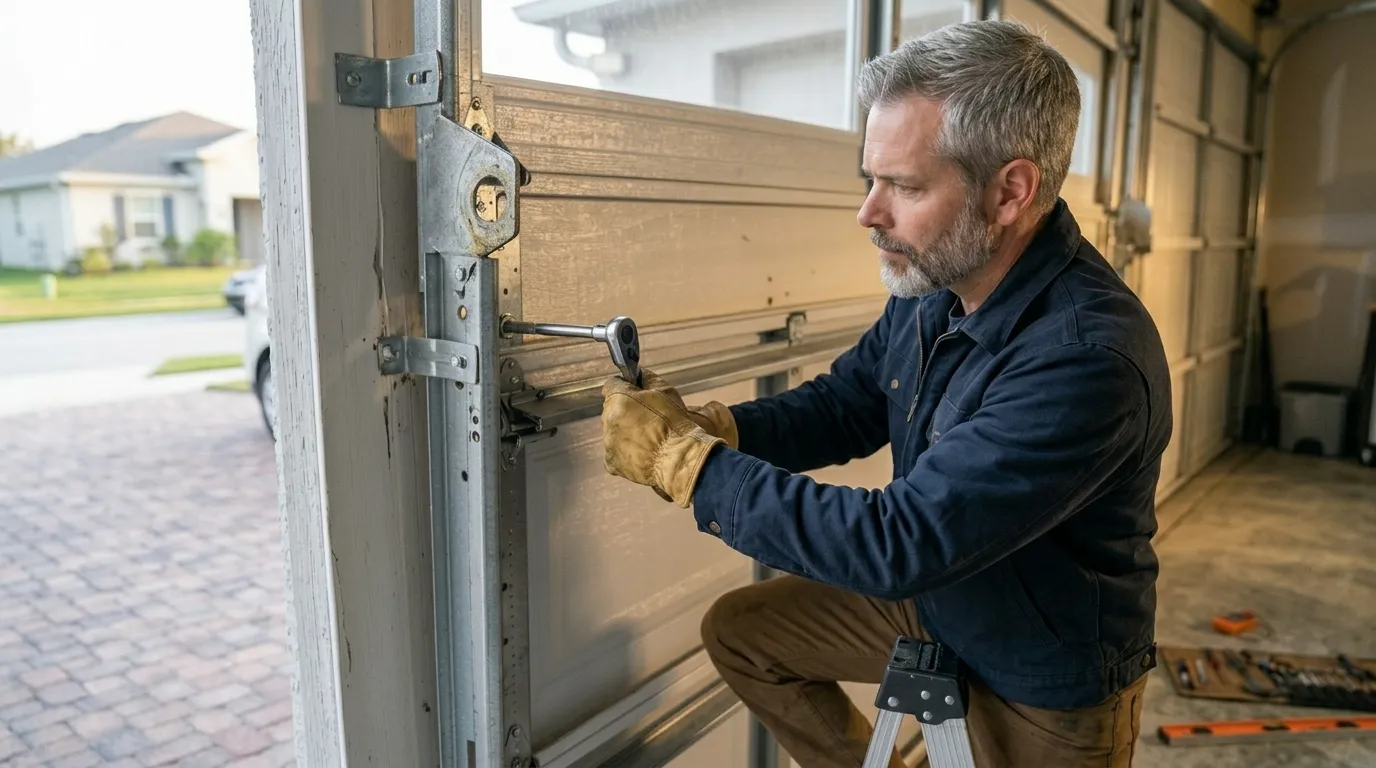
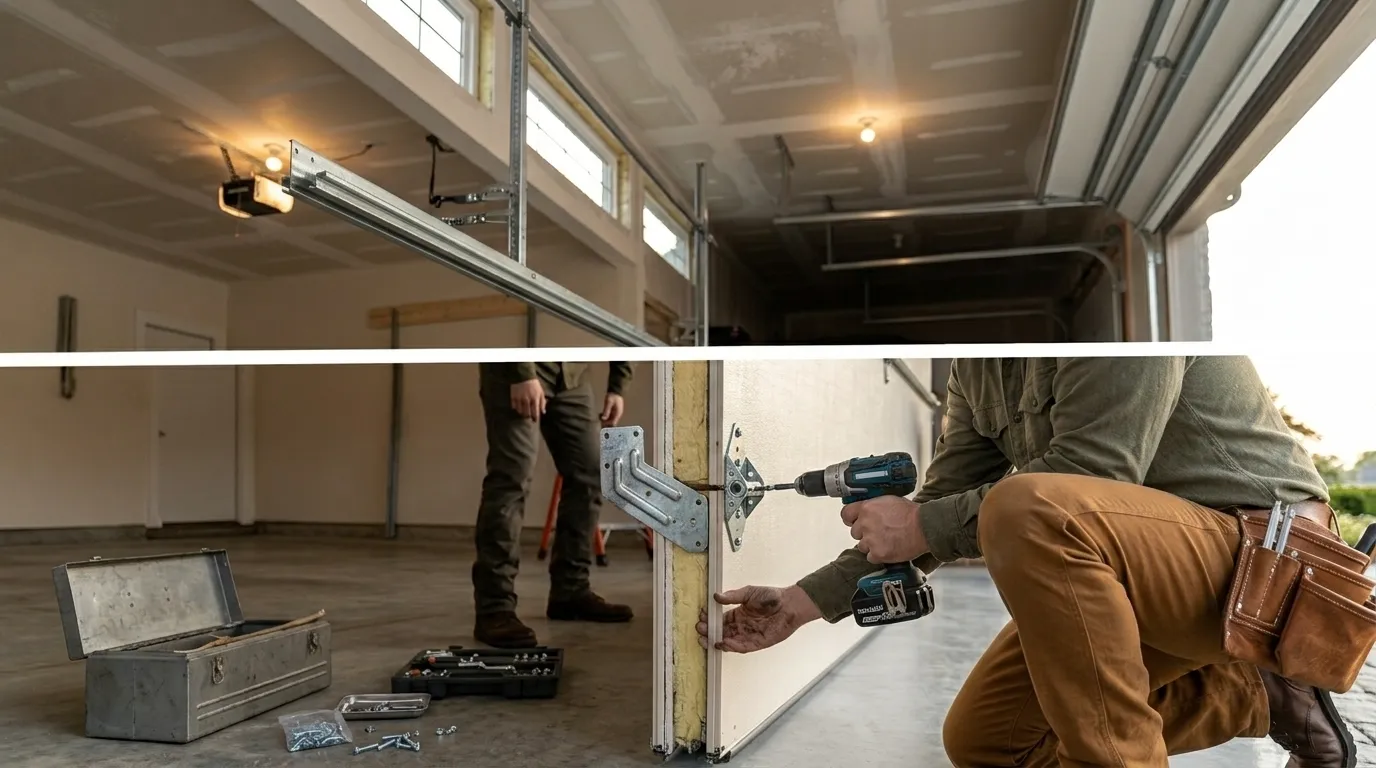
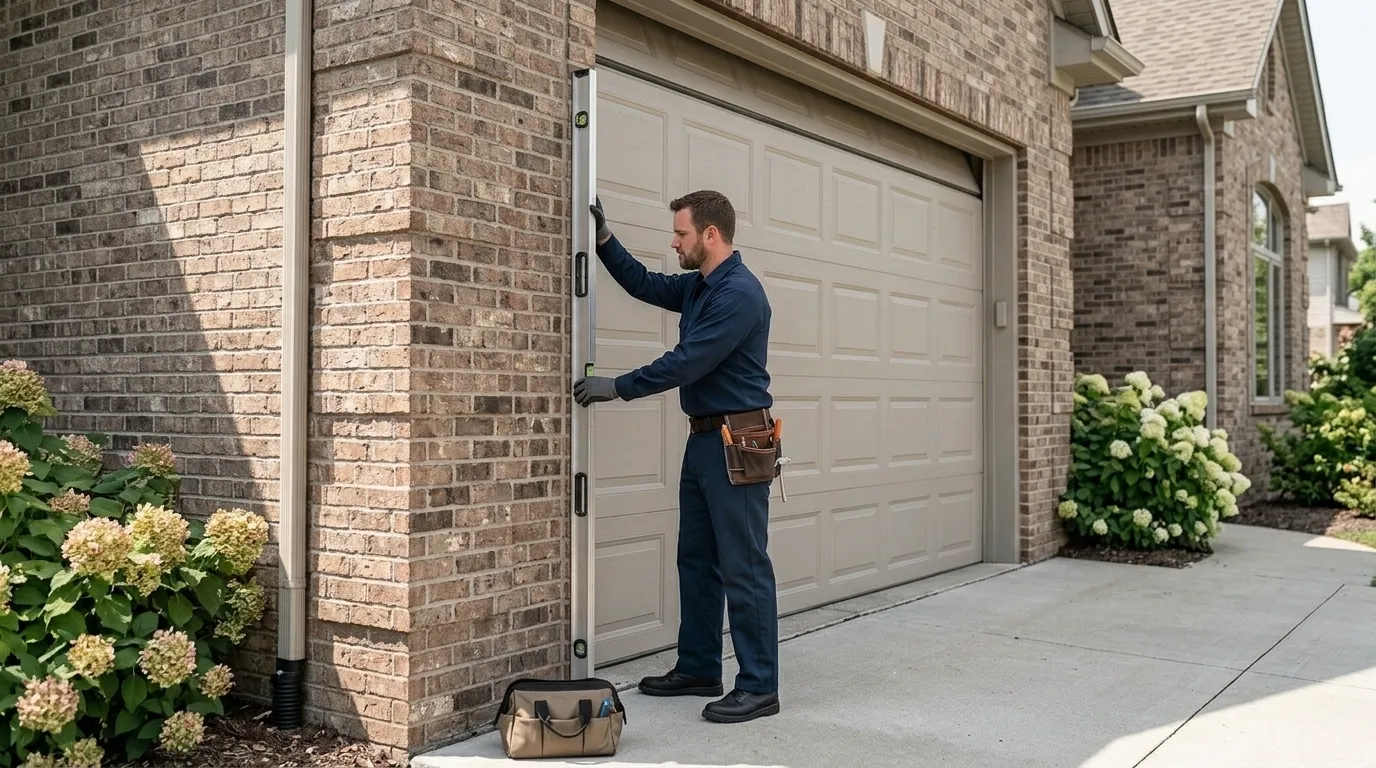
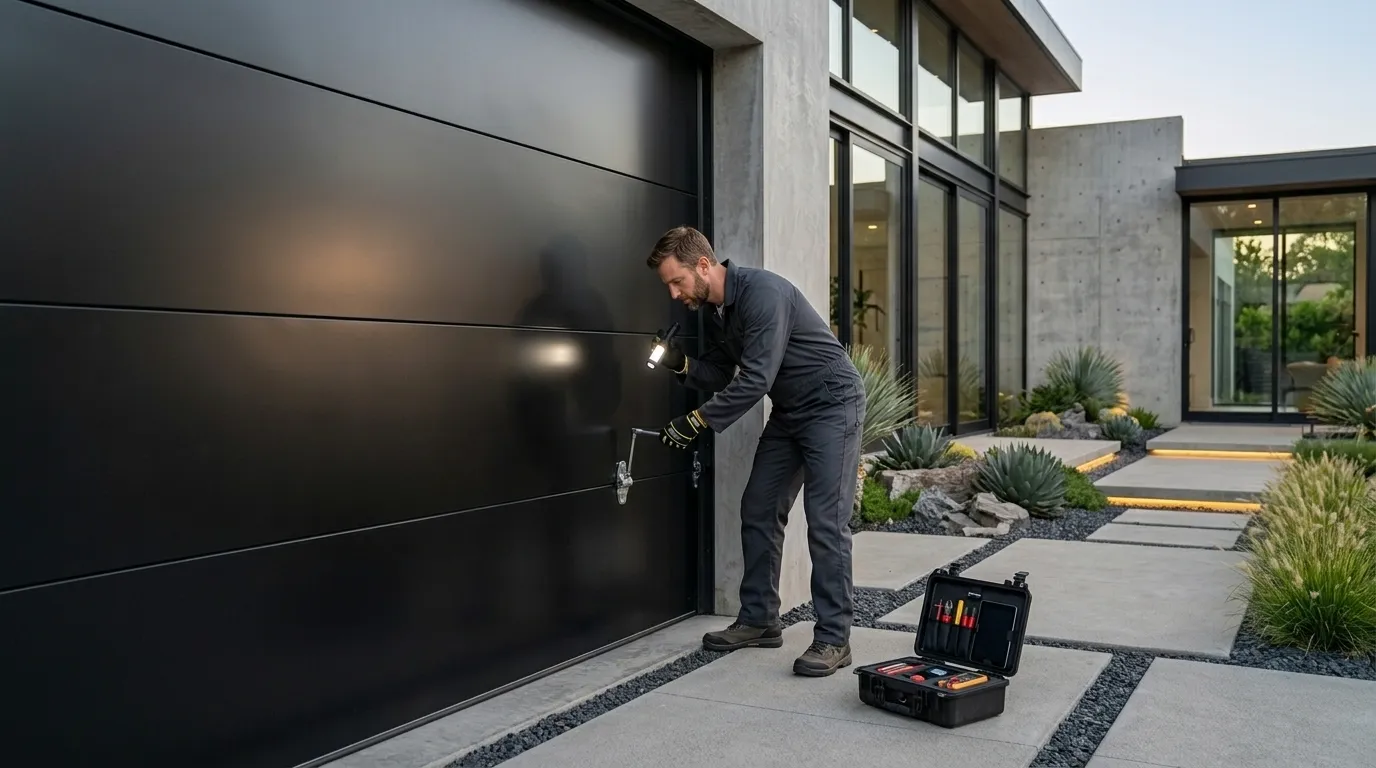
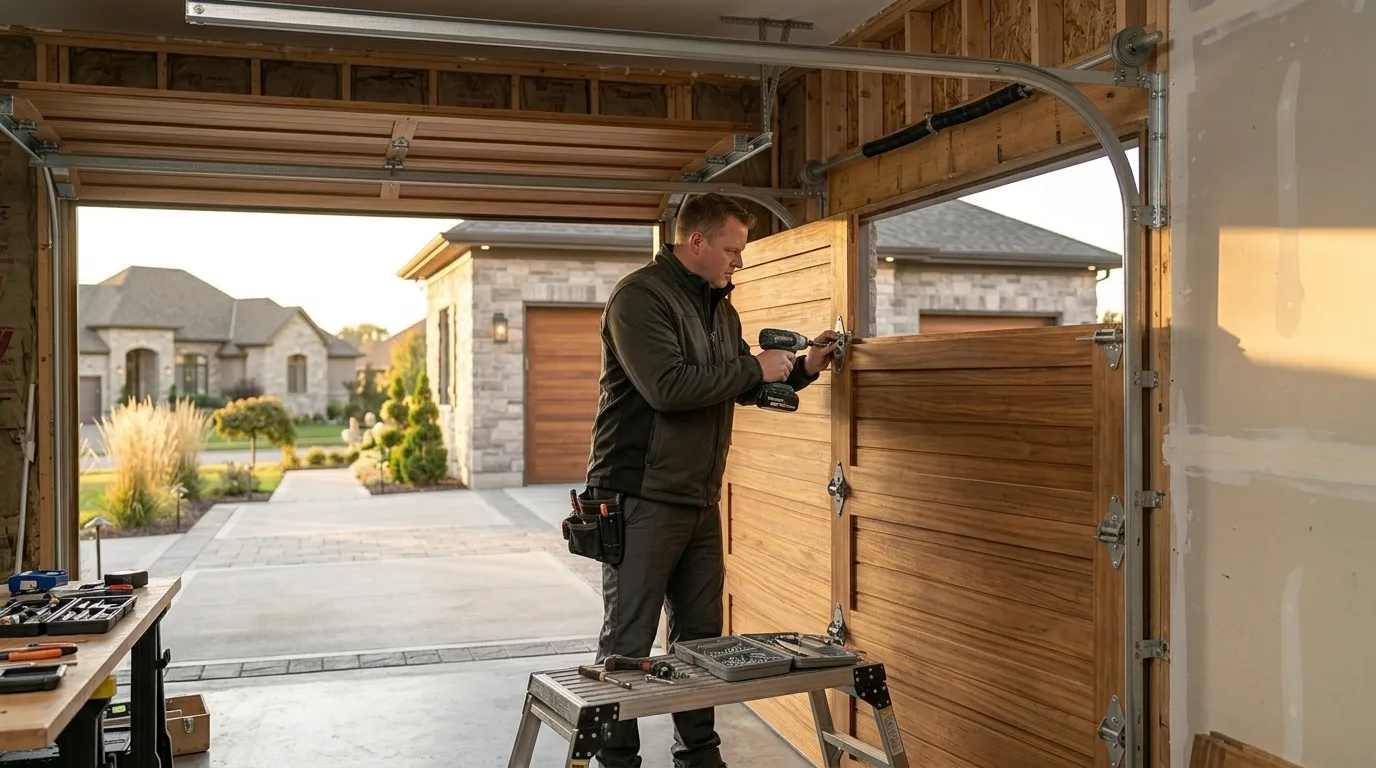
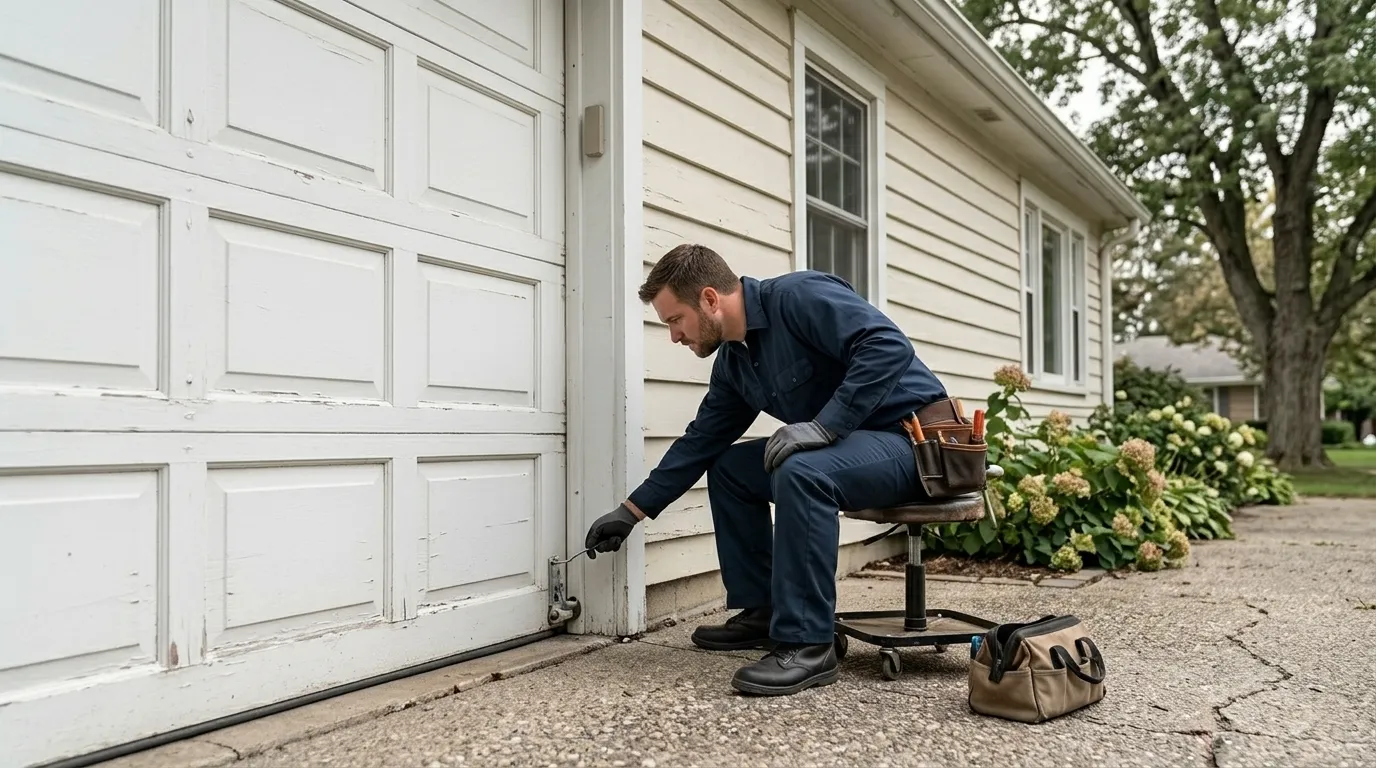
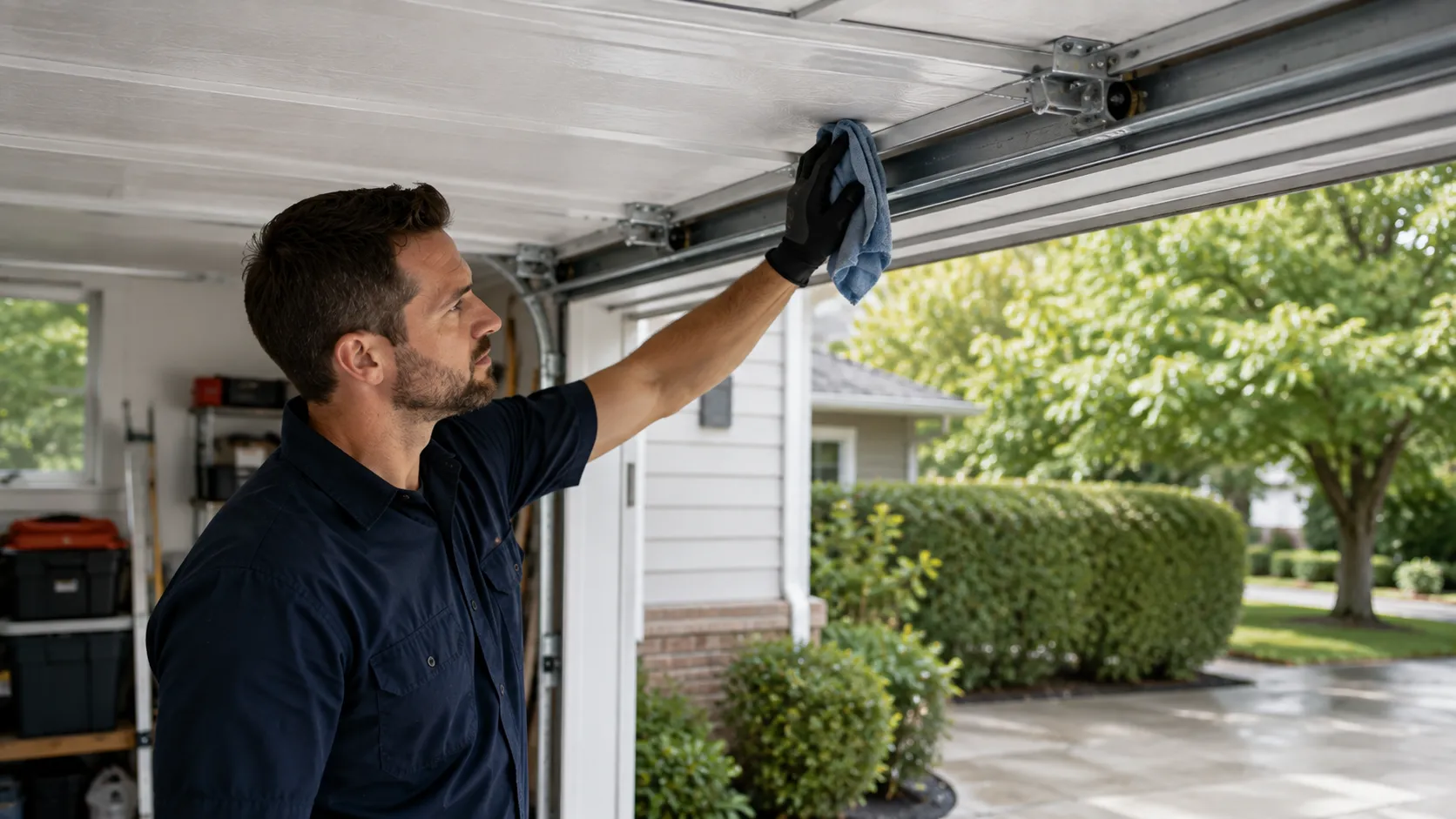
A look at doors, openers and springs we've installed and serviced across the Rockville metro.
Where We Work
Neighborhoods across the city and suburbs around the metro. Not sure if we reach you? Just ask.
Local Expertise
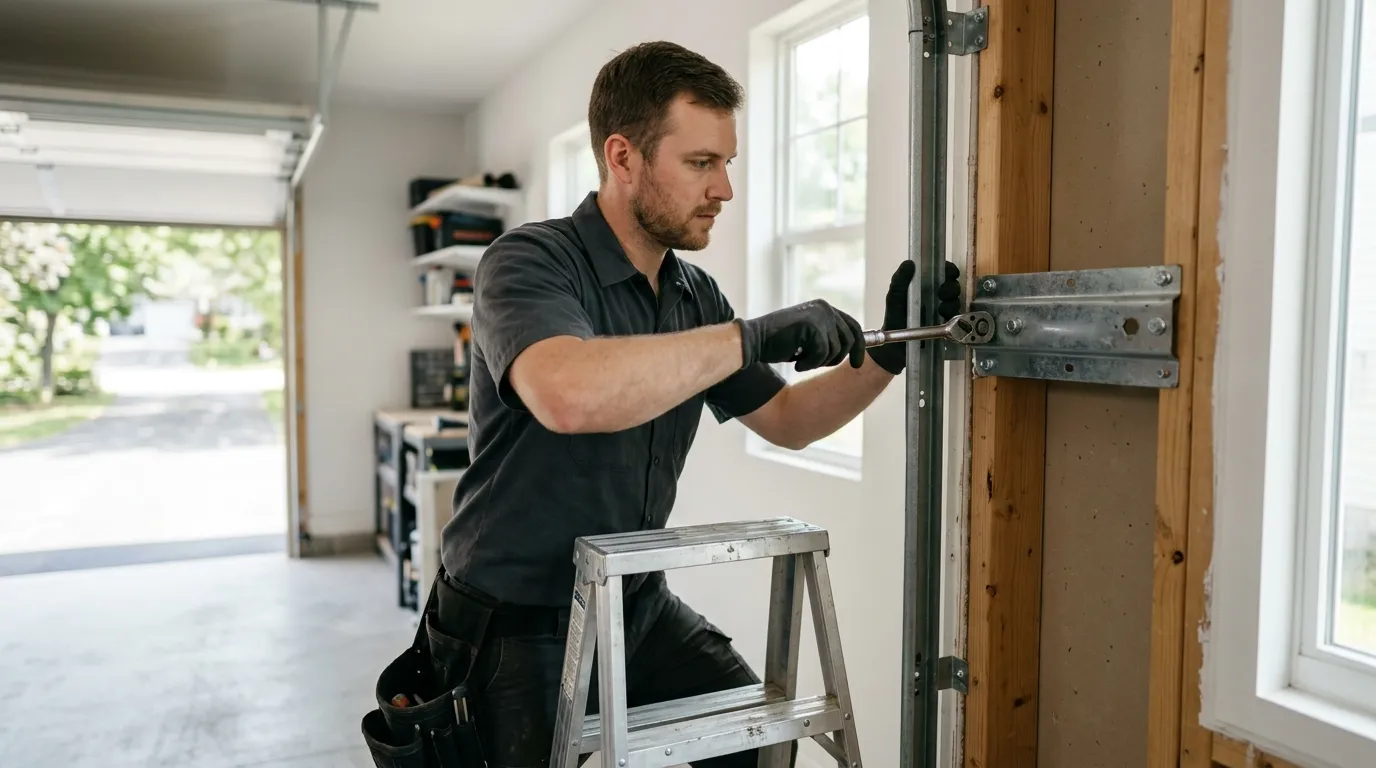
When you call, we ask what the door is doing - grinding, off track, opener clicking but not lifting - and get a sense of whether it's a spring, a cable, or the opener itself before a truck ever leaves. Most of the homes we work in around here went up between 1948 and 2014, with the bulk of that stock dating to the 1960s and 70s, so the hardware we run into tends to fall into a few familiar patterns rather than a wide spread of eras. That means the tech shows up with a decent guess already made, which cuts down on the back-and-forth. We check the door, the track alignment, the spring wind, and the opener's force settings before we quote anything. If the fix is straightforward - a broken torsion spring, a bent roller track, worn cables - we usually finish it the same visit. If parts need to be ordered for an older or discontinued opener model, we'll tell you that up front instead of promising a same-day close we can't back. We work throughout the service area, including Derwood, Redland, and North Bethesda, and we don't pad the visit with upsells you didn't ask about.
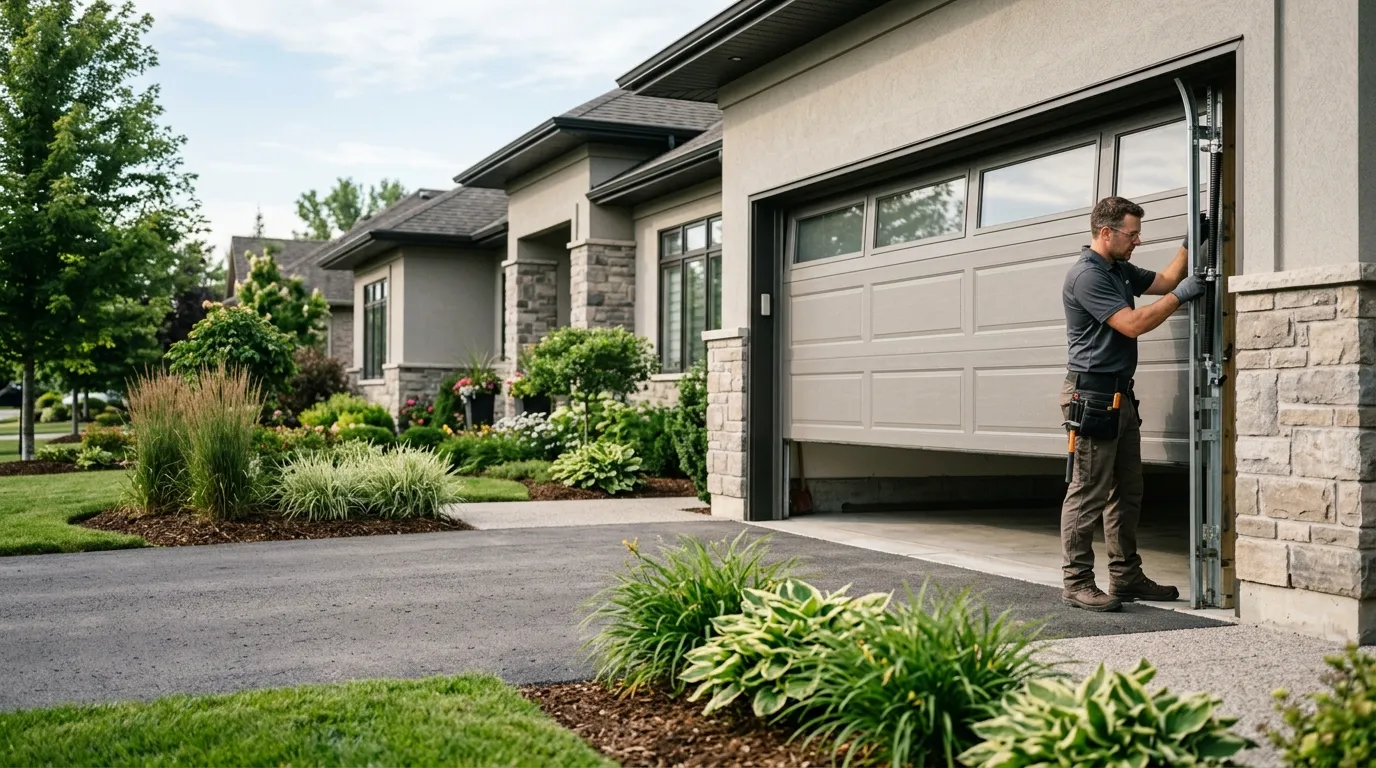
We're not going to print a price list here, because the honest answer is that it depends on what's actually wrong and what the door is made of. What we can tell you is what moves the number: the age and gauge of the door panels, whether the opener is original to a 1960s or 70s build or a newer replacement, and whether the spring system is a single or double torsion setup. Homes in this area carry a wide income range - the median household income across the service area sits around $117,493 - and that range shows up in the doors themselves, from bare-bones single-panel steel doors on older houses to heavier insulated doors on newer construction. A repair on a 50-year-old door with a spring size nobody stocks anymore can cost more in labor time than a straightforward cable replacement on a newer unit, even though the second job sounds more serious. We'll walk you through what we're charging for and why before we start, not after.
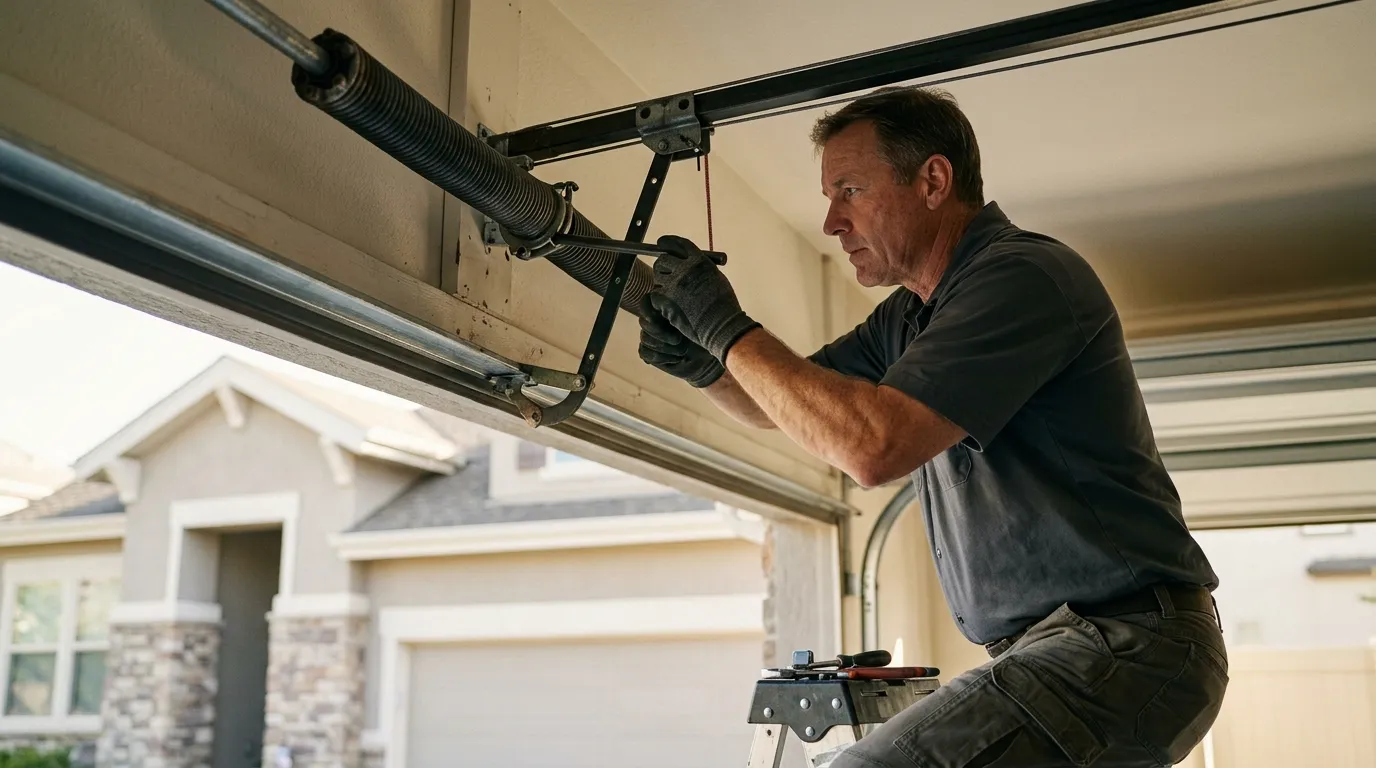
The service area runs through 62 named communities, and the housing tells a pretty consistent story: built mostly between 1948 and 2014, with a median build year around 1970, and a heavy concentration of 1960s and 70s construction. That's the era of steel single-panel doors, side-mounted torsion springs, and openers that have often been replaced two or three times since the house was built - sometimes with hardware that doesn't quite match the original track spacing. Across the wider service area there are roughly 322,833 households and about 114,754 owner-occupied houses, which is a lot of driveways with a door that's been through at least one Maryland winter too many. We see this pattern from Derwood and Redland out through Aspen Hill, Wheaton, and Kensington, and it holds fairly steady whether the house sits two miles out or closer to ten. Newer pockets of construction mixed in with the older stock mean we still run into modern insulated doors and updated openers, so it's not one-size-fits-all - but the majority of calls we get involve hardware that's decades old.
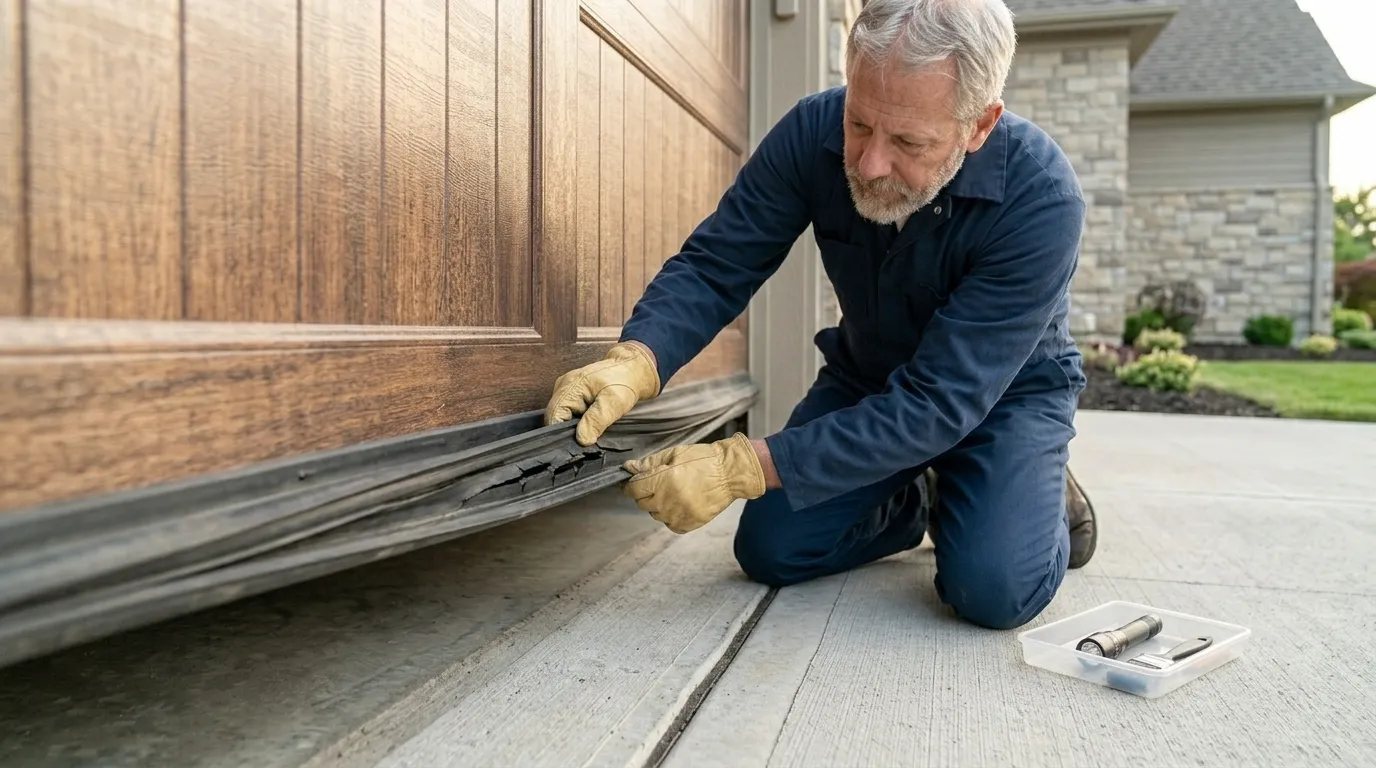
The climate band for this area is classified cold and severe, and that matters more for garage doors than people expect. Cold snaps stiffen torsion springs and make old lubricant seize, which is why so many of our winter calls are springs that finally let go on a morning when the metal contracted overnight. Panels on older steel doors can also warp slightly with repeated freeze-thaw cycles, especially on doors that were never insulated to begin with - common on the 1960s and 70s builds that make up so much of the stock here. We also see a fair number of openers with drive gears that have worn down from decades of use, sometimes original to the house, sometimes a first replacement from twenty years back. Tracks knocked out of alignment by a bumped car are common everywhere, but the severity of the winters here means a marginal spring or a slightly bent track tends to fail sooner rather than later, instead of limping along for another mild season.
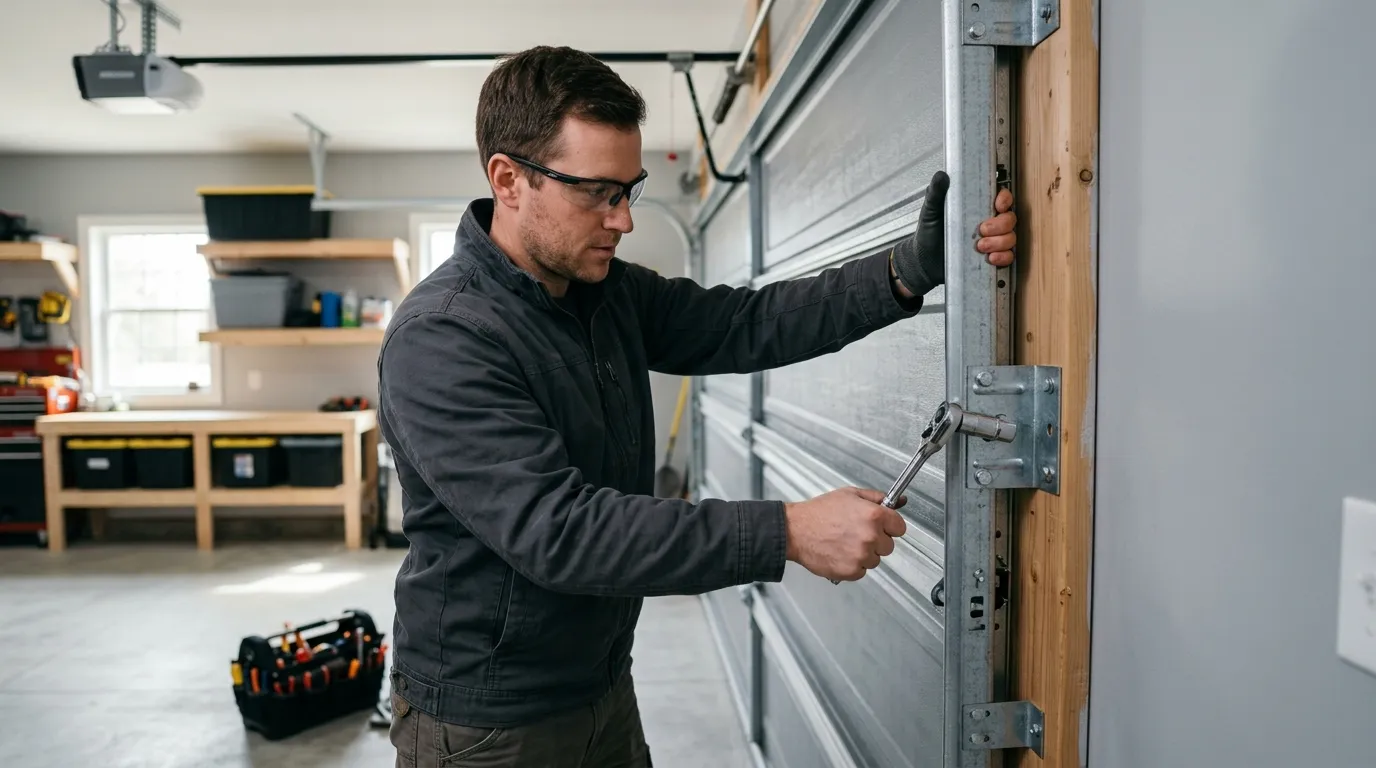
Sometimes the honest answer is to stop repairing and replace. If a door is old enough that the panel gauge is thin and dented in multiple places, or the track is bent badly enough that straightening it would just shift the problem somewhere else, patching it is throwing money at something that's going to need attention again within a year. Same goes for openers where the circuit board is failing intermittently - replacing a board on a fifteen-year-old unit sometimes costs close to what a new opener runs, and the new one comes with a warranty the old one doesn't. We'll tell you when we think that's the case instead of billing you for a repair we don't expect to hold. One limitation worth being upfront about: if a part is discontinued for an older opener model, we may need to order a compatible replacement rather than an exact match, and that can add a few days to the job. We'd rather say that now than have you find out mid-repair.
Good to Know
Most of the houses in this area were built between 1948 and 2014, with a median build year around 1970, so a lot of the doors and openers we service date from that 1960s-70s wave of construction. That means original single-panel steel doors and side-mounted torsion springs come up often, alongside openers that have been swapped once or twice since.
Yes. This area falls into a cold, severe climate band, and cold metal contracts and stiffens, which puts extra strain on torsion springs that are already near the end of their cycle life. We see a noticeable jump in spring failure calls during hard cold snaps compared to milder months.
We work throughout the surrounding service area, including Derwood, Redland, North Bethesda, Aspen Hill, and Kensington, among other nearby communities. Distance from the center of town runs from about two miles out to roughly a dozen, depending on the neighborhood.
Not a firm one. Price depends on the door's age, the spring configuration, and whether the opener is original or a later replacement, and those vary a lot across the housing stock here. We'll look at the door and explain the cost before doing any work.
Call now or request a free quote - same-day service on most repairs, upfront written pricing.