Rockville, MD · Garage Door Service
Aspen Hill homes went up mostly around 1970, and most still run original torsion hardware. Rockville Garage Door Pros drives out 4 miles to service it.
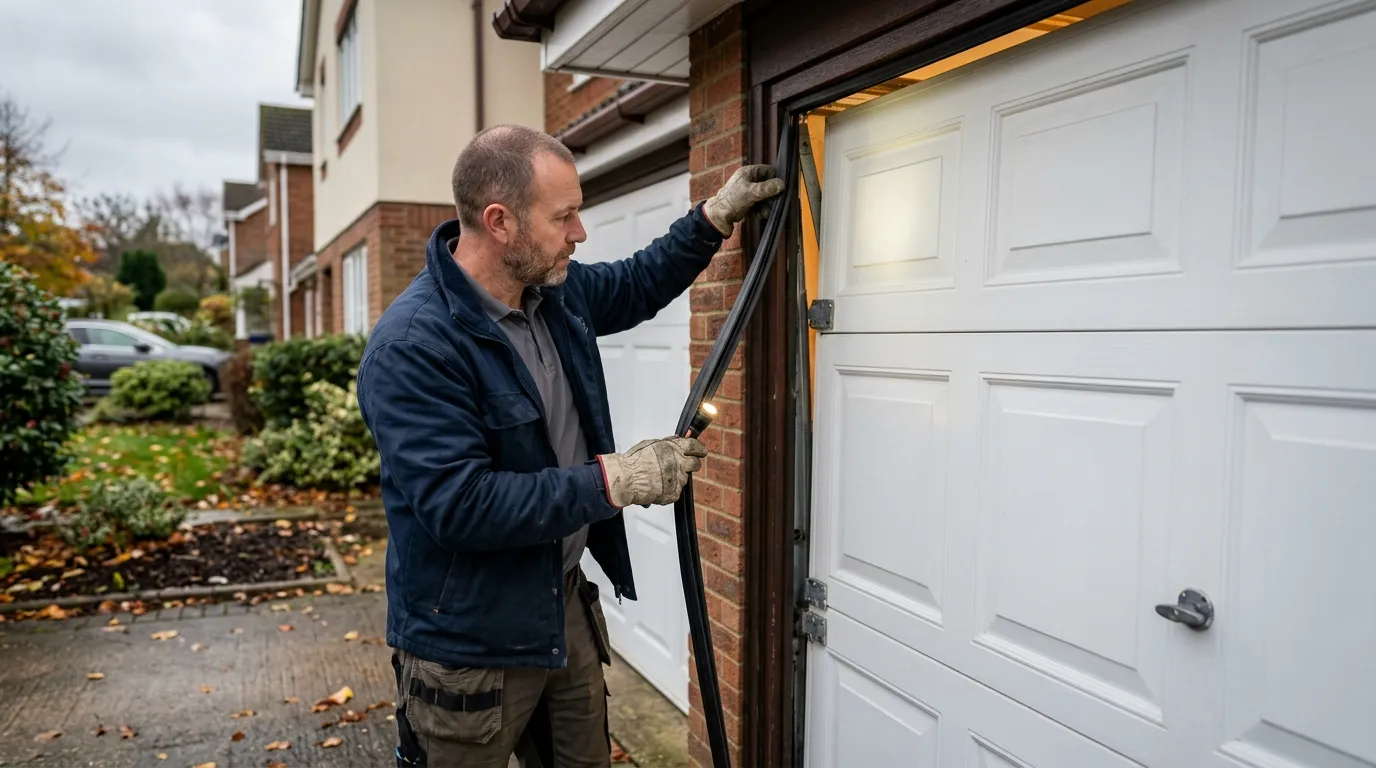
Aspen Hill's housing stock centers on 1970, which puts a lot of doors here on hardware that's now fifty-plus years old. If your house was built anywhere near that year and nobody's touched the door since, there's a decent chance the torsion spring, the drums, and the original steel rollers are all still the parts that shipped with the house. We carry standard torsion springs sized for the door weights common to that build era, plus the steel ball-bearing rollers, nylon rollers, and cable sets that replace the originals one-for-one. What we don't keep on the truck is anything discontinued or proprietary - a handful of doors from that period used hardware that hasn't been made in decades, and if you land on one of those, we order the part rather than force a mismatch. That's the honest limit: we stock what fits, not what's rare.
We come out from Rockville, about 4 miles away, so the parts on the truck are picked before we leave, based on what you tell us about the door's age and symptoms over the phone. If your house falls outside the 1970 window - older or newer - say so, because the hardware assumption changes.
The most common call from this part of Aspen Hill is a door that's gotten loud and slow over the past year or two, not one that's broken outright. Original rollers on a 1970-era track wear out of round long before they fail completely, so the door starts to shudder partway up, then smooths out, then shudders again. Owners often describe it as the door 'catching' at the same spot every time - that's a worn section of track or a roller that's flat-spotted, not usually the opener.
The other common pattern here is a spring that's never been touched. A torsion spring on a household with average use is rated for a set number of cycles, and a door original to a 1970 build has had a long time to use them up. When it lets go, it's sudden - the door won't lift, or it drops fast when you try. Given the area's cold winters, a spring already near the end of its life is more likely to give out on a January morning than in July, since cold steel is more brittle. If your door is fighting you every time it's cold out, that's not a coincidence.
For the wear pattern common to this housing era, the job is usually track alignment, roller replacement, and a spring check, in that order. We start with the track because a door that's out of alignment will chew through new rollers just as fast as it did the old ones - there's no point swapping parts onto a track that's still bent or loose at the brackets. Once the track's true, we replace the rollers with steel ball-bearing units, which hold up better long-term than the plastic rollers a lot of these doors shipped with in 1970.
The spring is judged on cycle count and condition, not age alone - a spring that's original but lightly used can still have life left, while a heavily used one from the same year might not. We size the replacement to the actual door weight, not a generic size, since doors from that era vary more than newer manufactured units. We also check the cable condition at the same time, since fraying cables are a quiet failure that shows up right alongside old springs and old rollers on houses this age.
We work out of Rockville and cover Aspen Hill as part of that territory, about 4 miles out. When you call, tell us the door's approximate age or the year the house was built if you know it - that one detail changes which parts we bring. If you don't know the year, a photo of the spring and rollers helps us figure out the era from the hardware itself.
With roughly 17,425 households in Aspen Hill and a good share of them sitting on that same original hardware, maintenance visits here tend to run long on the inspection side and short on surprises - we generally know what we're going to find before we open the panel. That's not a promise every job goes smoothly; a door that's been neglected for years can turn up more than one issue at once, and we'll tell you honestly if a repair isn't worth it compared to replacing the door outright.
A door built to 1970 specs wasn't engineered around anything you'd think of as extreme weather-proofing - insulation values, weatherstripping, and hardware coatings were all lighter than what's standard now. In a cold, severe winter climate, that shows up as brittle springs, stiff nylon rollers that crack rather than wear, and weatherstripping that's long since hardened and stopped sealing. None of that is a defect specific to any one house - it's just what fifty-plus winters do to hardware that was never built for this kind of cold cycling year after year.
Aspen Hill's median household income sits at $109,026, which tells us less about the doors than about expectations for the fix - most owners here want the original hardware kept running as long as it reasonably can be, rather than an automatic full replacement. We work that way by default: repair what's sound, replace what's not, and say plainly when a door's original hardware has reached the point where patching it further just delays the same failure.
If the house was built around 1970 and you've never had a repair call, it's a safe bet the spring, rollers, and track are original. Signs include painted-over hardware, non-bearing rollers, and a spring with no manufacture sticker. We can confirm on-site by checking the spring wire gauge and roller type against what was common for that build year.
Yes. Steel springs lose some flexibility in cold, severe winters, and a spring already near the end of its cycle life is more likely to snap on a cold morning than in summer. If your spring is original to a 1970-era door, winter is when it's most likely to fail.
No. We're based in Rockville and drive out to Aspen Hill, about 4 miles away, for service calls. There's no local branch or drop-off point here, just the truck coming to your door.
It depends on what's failed. A worn spring, roller set, or cable set is usually a straightforward repair even on an older door. If the panels themselves are dented, rusted, or the track is bent beyond adjustment, we'll tell you honestly when replacement makes more sense than continuing to patch it.
Call now or request a free quote - same-day service on most repairs, upfront written pricing.