Rockville, MD · Garage Door Service
Aspen Hill has about 17,425 households, mostly built around 1970. We install doors sized for that era's openings, 4 miles from our Rockville shop.
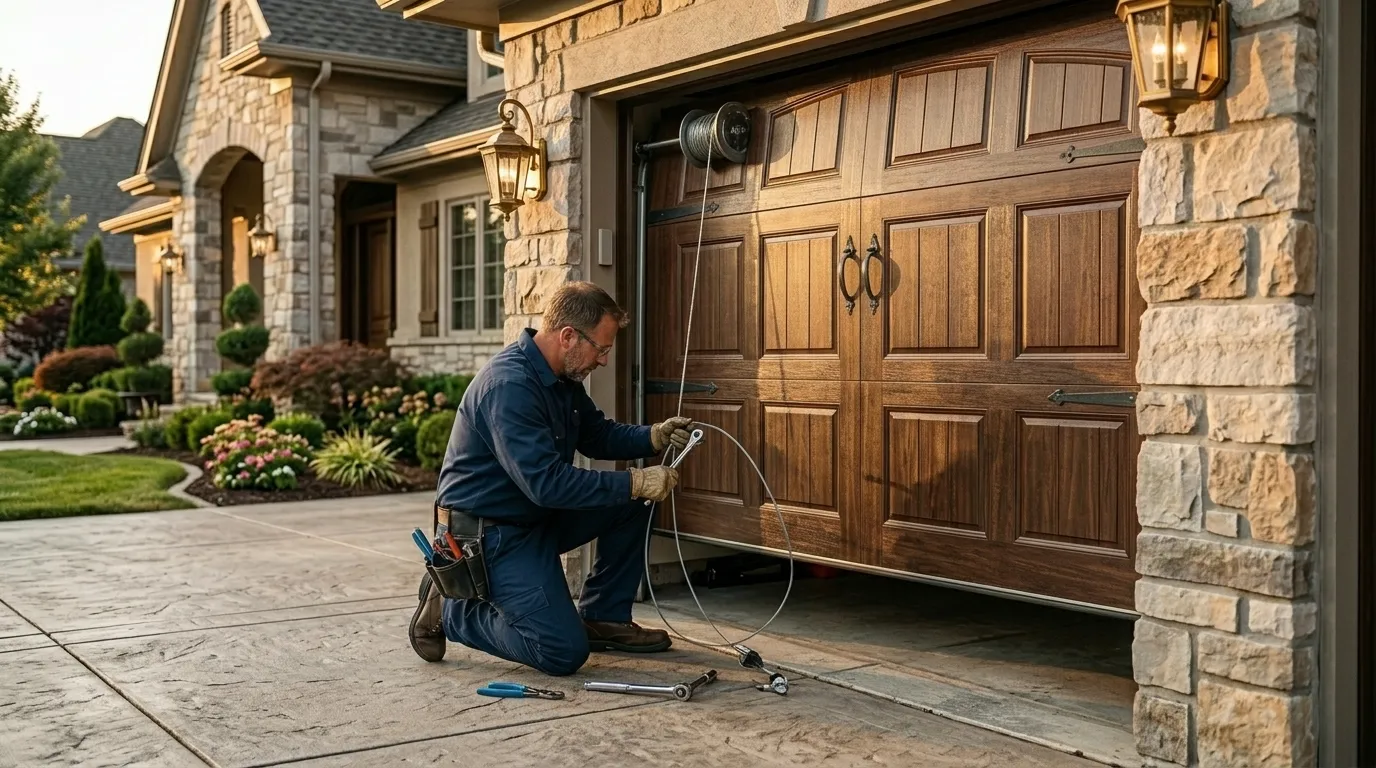
Aspen Hill runs about 17,425 households, small enough that the housing stock doesn't vary much block to block. Most of it went up around 1970, which is the number that actually decides what we load on the truck before we head over. Openings from that build year tend to run a standard 7-foot height with 16-foot doubles on the wider driveways, and the track hardware is almost always the older roll-formed steel, not the newer extruded aluminum you see in houses built after 2000.
We carry insulated steel sections sized for that opening range, along with torsion spring sets rated for the heavier doors that replaced whatever thin single-layer panel came with the house originally. If a homeowner wants a carriage-style door with windows, we bring samples rather than guess at what will clear the header height on a 1970-era garage, because those headers were framed tighter than what you'd find in newer construction.
We don't stock every custom width. If your opening is an odd size - something a previous owner modified - we may need to order the door itself, which adds a few days. That's the one limitation worth saying up front: standard widths go in fast, non-standard ones don't.
The call we get most from this part of the county is a door that's gone heavy and slow, or one that won't seat flush at the bottom anymore. On a house built around 1970, that's usually the original steel door - or a straight replacement of it - finally giving out after decades of Maryland winters. The panels themselves often still look fine from the driveway. It's the internal foam, if there ever was any, that's broken down, and the door has gotten heavier to lift than it was designed to be.
We also see openers straining against doors that were never rebalanced after a spring swap years back. The opener motor takes the load the spring should be carrying, burns out early, and the owner assumes the opener is the problem when the door itself needs replacing.
A new install fixes both at once: right-sized door, springs matched to its actual weight, opener working the way it's supposed to instead of compensating for old hardware.
Installation starts with a measure of the actual opening, not the nominal size stamped on the old door - after fifty-some years, framing settles and openings shift by a half inch or more. We pull the old door and track completely rather than reuse hardware from a 1970s install, since roll-formed track from that era doesn't match modern roller spacing and mixing old with new causes binding.
We set new torsion springs calculated for the new door's actual weight, not the old door's weight, which is the mistake that leads to an opener straining again within a year. Insulated steel sections go in with new rollers and cable, then the opener gets reprogrammed to the new travel distance and force settings - a door that's even an inch different in height needs that reset or it'll slam the last few inches down.
We test the balance by hand before we ever plug the opener back in. A door that won't hold still at half-open with the opener disconnected isn't ready to have a motor put back on it.
We don't keep a branch in Aspen Hill - the crew and the trucks work out of Rockville, about 4 miles off. That's a short enough run that it doesn't change your quote or add a trip fee, but it does mean we schedule the visit rather than showing up unannounced. When you call, we ask about your door's age and rough size so the right springs and panel stock are already on the truck when it leaves Rockville.
For a full replacement, we generally need one visit to measure and confirm the door style, then a second to install once the door itself is on hand - standard sizes we usually have on the truck already, non-standard ones take longer to source, as noted above.
This area sits in a climate zone rated cold and severe, which matters more for garage doors than most homeowners expect. A steel door with no insulation, or insulation that's degraded over fifty years, transmits enough cold that pipes and finished space next to the garage feel it in January. That's a different failure mode than what shows up in a milder climate, and it's why a door that looks structurally fine can still be worth replacing.
Generic installation advice written for a national audience assumes newer housing stock and doesn't account for openings framed to 1970-era standard sizes, or for hardware that's been through five decades of hard winters instead of two. A door and spring set sized off a national average, rather than off what's actually on this house, ends up either too light for the door or fighting an opener that can't handle the true weight. That mismatch is exactly what we're called out to fix after someone else's quick install goes in undersized.
For a standard-size opening with the door already on the truck, install is usually done in a single visit. If the opening is non-standard - common in houses that have been modified since the 1970 build - we may need to order the door first, which adds a few days before we can schedule the install.
No. We run out of Rockville, about 4 miles away, and schedule visits rather than operating a local branch. That distance doesn't add a fee, but it does mean the visit is booked ahead rather than same-day drop-in.
Often yes, but the opener needs reprogramming for the new door's travel distance and weight, even if the height only changes by an inch. We test balance by hand before reconnecting the opener so it isn't straining against a door it wasn't set up for.
On houses built around 1970, that's usually insulation inside the panel breaking down after decades, or springs that were sized for the original door and never rematched when hardware got swapped. Either way, the opener ends up carrying weight the springs should be carrying.
Call now or request a free quote - same-day service on most repairs, upfront written pricing.