Rockville, MD · Garage Door Service
Aspen Hill's 1970-era doors jump track when steel panels contract in hard winters. Rockville Garage Door Pros drives the 4 miles out to fix it right.
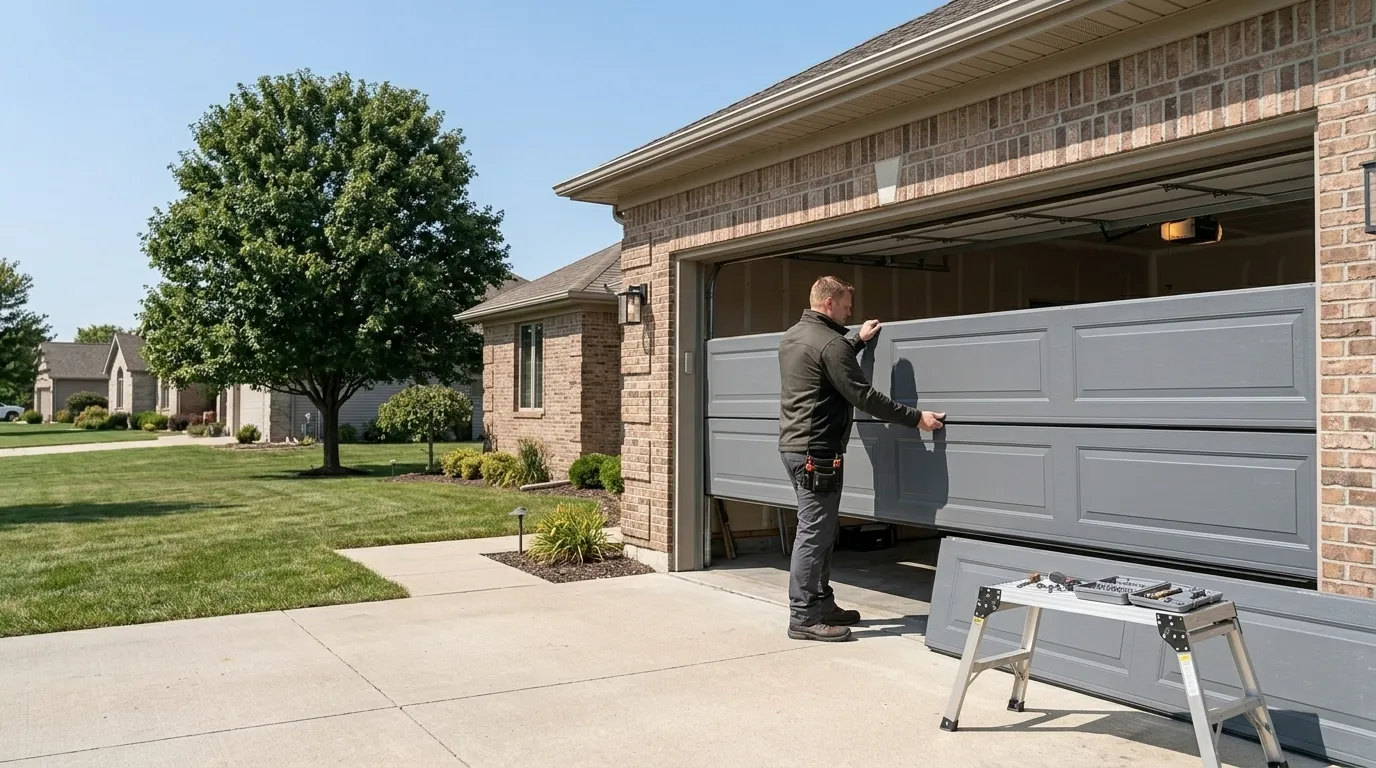
Aspen Hill's housing stock centers on 1970, which puts most garage doors here squarely in the sectional steel era - single-layer panels, 16x7 or 9x7 openings, and track hung on brackets that were fine for 1970 but were never built for fifty years of use. A lot of these doors still run on the original extension-spring setup rather than torsion, with roller carriages that were stamped thinner than what goes into a door today. That matters because when a panel jumps the track on a door like this, the fix isn't always a bent piece of rail - sometimes the bracket itself has worked loose from the jamb over decades of freeze and thaw, and the hole it was screwed into no longer holds a screw the same way. We carry replacement rollers, track sections, and bracket hardware sized for both older extension-spring doors and newer torsion setups, because a truck that only stocks one era of parts turns a same-visit repair into a second trip.
The classic call from this area is a door that runs fine most of the way up or down and then binds, tilts, or drops out of the track near the top or bottom of its run. Sometimes a panel corner pops loose from the roller and hangs at an angle. On the older extension-spring doors common in Aspen Hill, this often traces back to a roller that's worn oval instead of round, riding loose in a track that's opened up slightly at the seams. In this area's cold season, steel track contracts, and a joint that had a little play in August can have enough play in January for a roller to walk right out of it on a hard stop. We also see it on doors where a cable has frayed and lets one side of the door drop faster than the other, twisting the whole panel off its rail.
We start by finding out whether the track moved, the roller failed, or the door frame itself flexed - because those three get fixed three different ways and guessing wrong means a callback. If it's a bent or spread track section, we pull it, straighten or replace it, and reset the bracket spacing rather than just muscling the door back onto bent rail, which never holds. If it's a worn roller, we swap the full set rather than the one that failed, since the others on a fifty-year-old door are usually close behind it. On the extension-spring doors that are common in this part of Aspen Hill, we also check cable condition and pulley wear while the door is open, because a cable failure is what usually causes the off-track problem to repeat within a season. One honest limit: if the track brackets have pulled loose from a rotted or shifted door frame, that's a carpentry problem before it's a garage door problem, and we'll tell you that instead of bolting hardware into wood that won't hold it.
We run this call out of Rockville, about 4 miles from Aspen Hill, so there's no separate branch or dispatch point to worry about - one truck, one route, out and back. Tell us the door's age if you know it, whether it's extension-spring or torsion, and which side is off the track, and we'll bring rollers and bracket hardware sized for both eras rather than showing up and having to reorder a part. If the door's badly warped or the track damage is extensive enough that repair costs more than it's worth on a door this old, we'll say so before we start, not after.
Aspen Hill sits in a cold-winter band, and a lot of the doors here are original or close to it - built around 1970, on hardware that predates the roller and track standards used today. That combination is what drives the off-track calls: steel that contracts in winter, track brackets that have loosened over fifty years of seasonal movement, and rollers that were never designed to run this long. It's less about any one storm and more about accumulated seasonal flex meeting parts nobody's replaced since the Nixon administration. A newer door in a newer part of the county with torsion hardware and modern nylon rollers just doesn't generate the same call as often.
On a door built around 1970, which describes most of the housing stock in Aspen Hill, steel track contracts in cold weather and brackets that have loosened over decades give it just enough play for a roller to walk out at the top or bottom of the run. It's a seasonal pattern on older hardware, not a one-time accident.
Depends on what's actually damaged. If it's a bent track section or worn rollers, repair is usually the right call. If the track brackets have pulled out of a rotted or shifted frame, or the door itself is badly warped, replacement often costs less over time than repeated repairs - we'll tell you which situation you're in before we start work.
Aspen Hill is about 4 miles from our Rockville location, so it's a short, direct run - there's no separate branch office here, just one truck coming out to do the job.
Yes. A lot of Aspen Hill's doors date to around 1970 and still run on extension-spring hardware rather than torsion, so we stock rollers, track, and bracket hardware sized for both systems rather than showing up prepared for only one era.
Call now or request a free quote - same-day service on most repairs, upfront written pricing.