Rockville, MD · Garage Door Service
Derwood homes mostly date to the mid-1980s, later than the Rockville average - different springs, different openers. We run trucks from Rockville, 2 miles out, for same-day emergency calls.
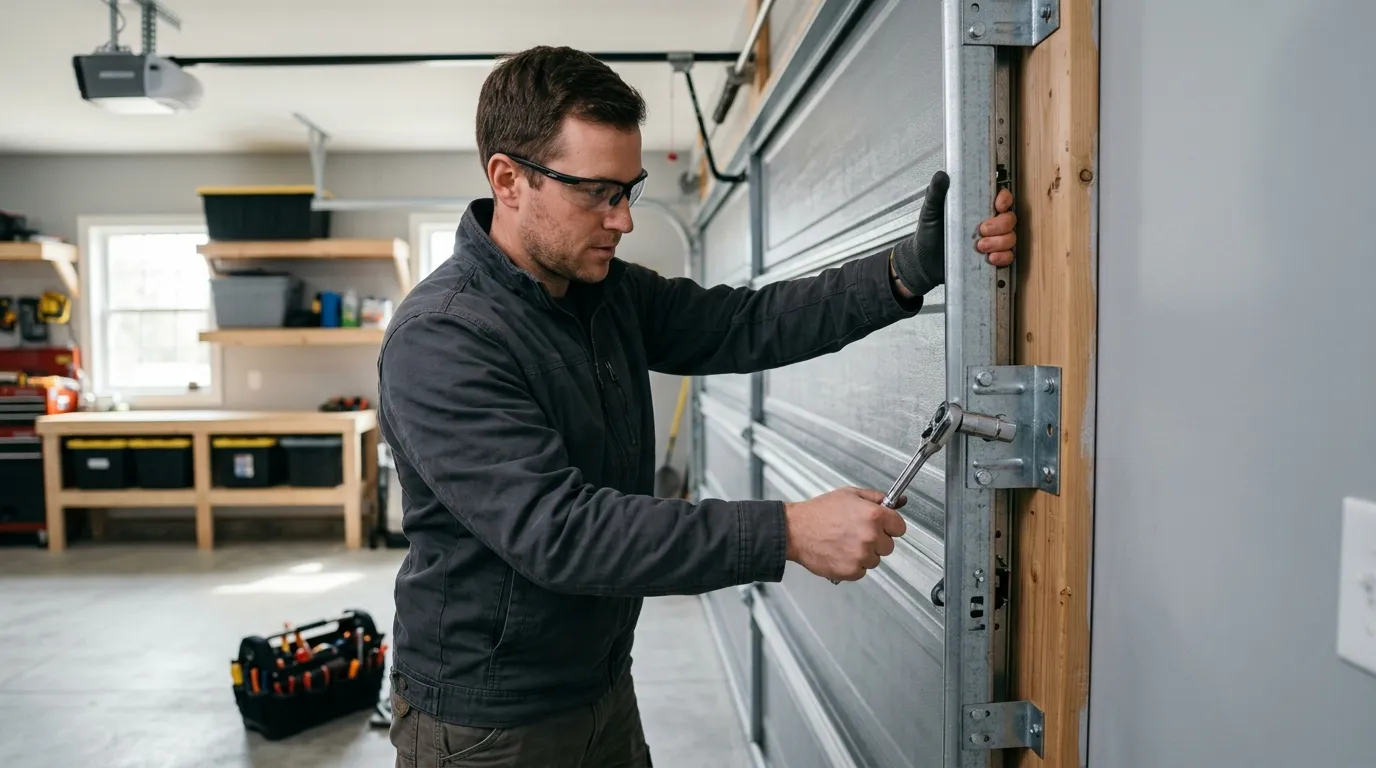
Derwood sits about 2 miles from our Rockville shop, one of the closest stops we make in the service area. That distance matters less than the door itself. Because most Derwood houses went up around 1985 - later than the 1970 median across the wider Rockville service area - you're less likely to be dealing with a door that's outlived three openers, and more likely to be dealing with the first or second-generation chain-drive opener that came with the house. Parts for that generation are still on the shelf, which is the main reason a repair here tends to move faster than a repair in a 1960s pocket of the service area, where obsolete hardware slows the same job down. We don't quote a fixed response time for Derwood specifically - traffic on the route from Rockville varies by hour, and we won't promise a number we can't hold to.
A broken torsion spring on a mid-1980s double door is usually a straight swap: we match the wire size and wind count to the door weight, not to whatever's left hanging on the shaft. Openers from that era are typically 1/2-horsepower chain units, and when the gear set strips or the logic board dies, replacement is often cheaper than sourcing the exact discontinued part. Track and roller work is the other common call - 1980s track was set to standard clearances that mostly still match today's steel doors, so realignment is usually a bracket and lag-screw job, not a full track swap. We bring spring stock sized for the door heights typical of this build era, along with standard chain and belt-drive openers, so most Derwood calls close in one visit.
This part of the service area sits in a cold-climate band with real winter severity, and a garage door built in the mid-1980s wasn't engineered with today's insulation standards or the same cold-weather steel treatments. Cold makes torsion spring steel more brittle right at the moment homeowners are opening and closing doors most, heating and cooling the garage air behind them. On a door that's roughly 35-40 years old, that's the spring that finally lets go - not because Derwood had a storm, but because the door has done tens of thousands of cycles on original hardware that was never rated for another decade of this weather. Newer doors in the area, and there are some, tend to fail at the opener rather than the spring, since manufacturers upgraded spring cycle ratings well after the mid-80s stock went in.
If the door won't budge and you hear a bang before it stopped moving, that's a torsion spring letting go - do not run the opener again, you'll strip the gear or bend the rail. If the door reverses partway up with no obvious bang, check the sensors first; on 1980s garages the photo-eye brackets sit low and get knocked out of alignment by anything stored nearby. A door that opens but won't seal tight at the bottom is often the weatherstrip, cheap to fix, but ignoring it in a cold-climate winter lets moisture into wood jambs that weren't treated the way current lumber is. One honest limit: if the opener motor and the spring both fail the same week on a door this age, replacing the whole unit is usually the better dollar-for-dollar call than repairing it piece by piece - we'll tell you that on site instead of running up a repair bill on a door near the end of its life.
No. We run out of Rockville, about 2 miles away, and Derwood is one of the closer stops on our route. We don't operate a separate branch here - every job is dispatched from the Rockville shop.
No, generally newer. Most Derwood homes were built around 1985, later than the roughly 1970 median across the wider service area, so openers and track hardware here tend to be a bit more modern than in the older 1960s pockets nearby.
Torsion springs are rated for a set number of open-close cycles, and cold weather makes the steel more brittle right when winter heating and cooling puts more cycles on the door. On a door built in the mid-1980s, that combination is the most common reason springs finally give out.
Sometimes. If it's just the gear or the logic board, a repair is often cheaper. If the motor and the spring fail together, replacement is usually the better value - we'll tell you which applies once we're on site looking at the actual unit.
Call now or request a free quote - same-day service on most repairs, upfront written pricing.