Rockville, MD · Garage Door Service
Derwood's houses mostly went up around 1985, later than the rest of the Rockville service area. That build year sets the hardware we find on most calls out here.
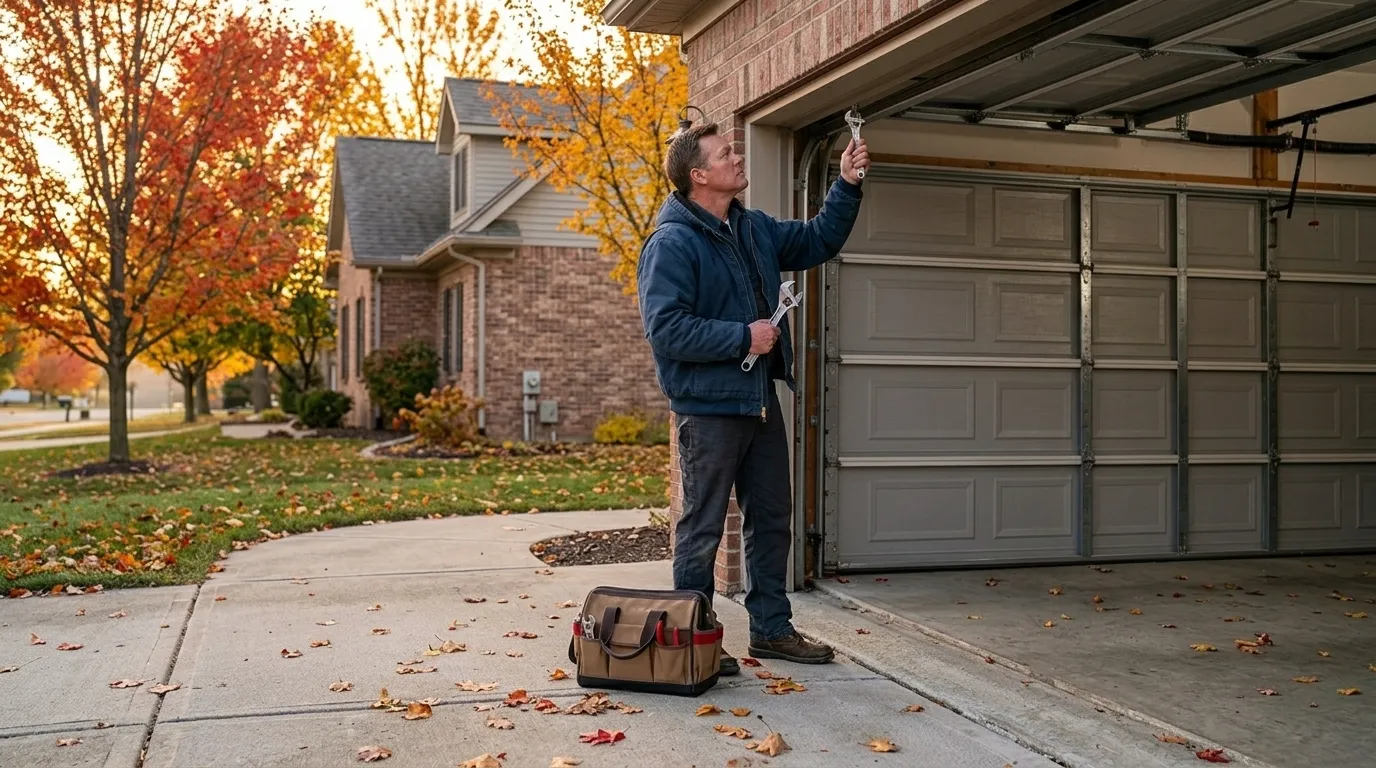
We run this out of Rockville, about 2 miles away, so getting a truck to Derwood isn't the long part of the job. What takes time is matching parts to what's actually on the door. Derwood's housing stock centers on 1985, a good decade or more newer than a lot of the surrounding service area, which sits closer to a 1970 median build year. That gap matters: doors and openers installed in the mid-80s used a different generation of hardware than what went into homes built in the 50s and 60s. If your opener or spring setup is original to a 1985 build, we usually know what we're walking into before we open the truck. If it's been swapped once already by a previous owner, that's the part that adds time - figuring out what generation of hardware is actually hanging in the opening, not driving to get there.
With 764 households in Derwood, this isn't a neighborhood we're guessing about - it's small enough that the door types repeat. Mid-80s construction generally paired steel doors with lighter-gauge panels and standard steel track, and a lot of those original setups are still running on their first or second spring set. We check the spring wind and cable condition before anything else, because on a door this age the spring is the part most likely to have quietly outlived its rated cycle count. Cold-climate stress (this area sits in a severe cold band) makes brittle cable and stiffened lubricant show up as noise and drag before they show up as a full failure - so we're listening for that on every call, not just responding to a dead opener. One honest limit: if the track or hardware is a discontinued 1980s pattern and the panel is cracked or bowed beyond a bracket fix, we're not going to chase a part that doesn't exist anymore. At that point we say so and price a replacement instead of stretching a repair past what it's worth.
Derwood's median household income runs around $93,000, noticeably under the roughly $117,493 median for the wider Rockville-area service territory. That's not a comment on the neighborhood - it's why replacement decisions here tend to lean toward repair first, and why we try to be straight about what's actually worth fixing versus what's just delaying a bigger bill. Doors built through the mid-80s were not built to current cold-weather sealing standards, and in a severe cold band that shows up as hardened weatherstripping, stiff rollers, and openers straining on cold mornings - all symptoms that read like something's broken when it's really just age plus temperature. The other reason this fails differently here than in the older 1960s-70s stock nearby: those houses have often already had one full hardware swap by now. Derwood houses, sitting closer to 1985, are more likely to still be running original springs and rollers that have simply never been touched, which changes what's likely to fail first.
The call we get most from this stretch of Derwood is a door that's suddenly loud, or one that hesitates a few inches off the floor before it commits to opening. On a house from this build era, that's usually a spring that's lost tension unevenly, not a dead opener - the opener's motor is straining to make up for what the spring should be doing on its own. Cold mornings make it worse and mask the real cause, since a stiff door in freezing weather can look like a spring problem even when it's dried-out rollers. We check spring tension, roller condition, and track alignment in that order, because on doors from this period that's the sequence that usually turns up the actual fault. If the door's gone quiet and just stopped instead of struggling, that's a different call - and usually means the opener itself, not the spring.
Newer on the whole. Derwood's housing centers on a median build year of about 1985, while the broader service area skews toward 1970. That means original hardware here tends to be a later generation of spring and opener than what you'd find on an older street nearby.
No. We work out of Rockville and drive the roughly 2 miles into Derwood for calls. There's no separate depot or crew based here - it's the same team and truck that covers the rest of the service area.
Cold stiffens lubricant and hardens rubber weatherstripping, which makes a door that's slightly worn sound a lot worse in freezing weather than it does in summer. This area sits in a severe cold climate band, so that seasonal swing is common and doesn't always mean the hardware itself has failed.
Depends on the panel and track condition, not just the age. If the spring or rollers are worn but the panel's straight and the track isn't bent, repair is usually the cheaper and sound option. If the panel's cracked or the track pattern is discontinued, we'll say so rather than force a repair.
Call now or request a free quote - same-day service on most repairs, upfront written pricing.