Rockville, MD · Garage Door Service
North Bethesda homes mostly date from 1982 on, later than the Rockville area's older stock, which changes door sizing, spring rating, and opener choice.
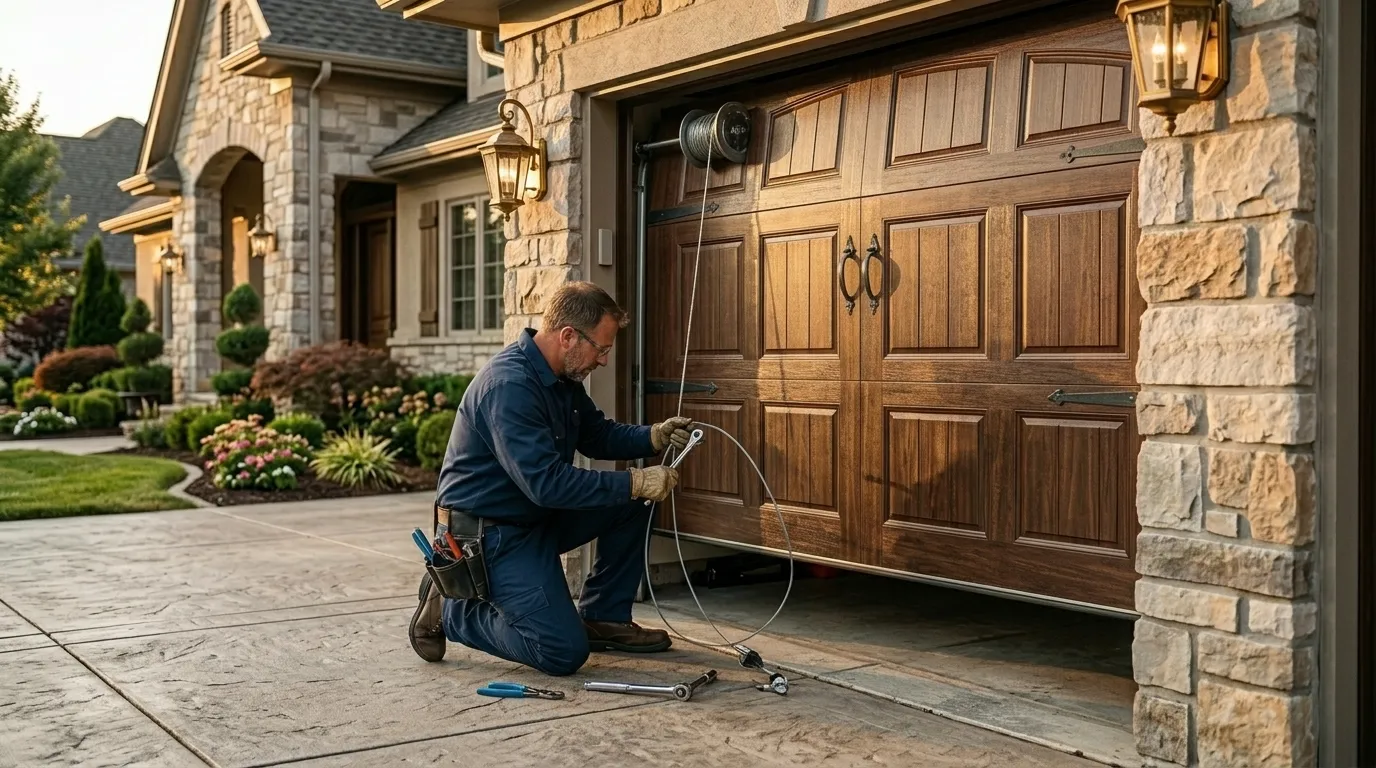
North Bethesda counts about 21,846 households, a size that puts it well below the 322,833 households spread across the wider Rockville service area, but big enough that the same fault shows up on plenty of doors within a few blocks of each other. The difference is the age of the stock. Median year built here is 1982, a decade or more past the 1970 median for the service area as a whole, and later than the 1960s-70s construction that dominates most of the 62 named areas Rockville Garage Door Pros covers. That gap matters for installs. A house built in 1982 usually came with a wider double-door opening sized for two cars, steel panels instead of the older wood-composite doors, and a torsion spring setup rated for a heavier door than what went into a mid-1960s build. When those original springs and openers finally give out - and at 40-plus years old, most are due - the replacement has to match a door and track that's a different generation than what a lot of installers around here are used to seeing.
North Bethesda sits in the same cold-severe climate band as the rest of the service area, so winter is the test every door eventually fails. On a 1982-era door, that usually shows up as a bottom seal that's shrunk stiff, a steel panel with no rigid-foam backing losing more heat than the household wants to pay for, or a torsion spring that's lost tension faster because decades of freeze-thaw cycles wear steel harder than mild winters do. Household income here runs higher than the service-area median - $128,970 against $117,493 - which changes what we get asked for. Fewer calls asking for the cheapest door that'll pass inspection, more asking for an insulated steel or composite door with a stronger R-value and an opener with battery backup, because losing power during a cold snap and being locked out of the garage isn't something people here want to deal with. The complication on our end is availability: higher-end insulated doors and matched hardware aren't something we stock ready to grab off a shelf. A double-wide insulated door in a less common width can mean an order lead time longer than a homeowner expects when the old door just quit.
We come out from Rockville, about 4 miles down the road, to measure the opening before ordering anything. On a house from the early 1980s, the double door opening is usually a standard width, but we still check headroom and track clearance rather than assume it matches a newer build - a lot of these garages were framed before the current door and opener specs settled into what's common now. For a door that's original to a 1982-built house, we're not trying to match a panel style that hasn't been made in decades; we spec a new door and a torsion spring rated to the actual weight of what's going in, not what the old spring happened to hold. Given the cold-severe climate here, insulated doors are the default suggestion, and if you want the opener side covered against outages, that's a separate conversation about the unit, not the door itself. You can see the full rundown of what we handle across the wider service area on our Rockville installation page, and there's more on how we work specifically in North Bethesda on our North Bethesda page.
The call usually starts the same way: the door won't lift past a foot, or it slams down instead of lowering on its own weight. On a door this age, that's almost always a spring that's lost tension - not the opener motor, though most people assume it's the motor first. Springs on a 1982-era double door were sized for the door as built, not for the extra insulation panel or added hardware someone may have bolted onto the door over the years. If the door's gotten louder, or you've noticed the panels flexing more than they used to at the bottom corners, that's usually the steel fatiguing on a door that's now over 40 years old. We won't tell you the door needs replacing when a spring and a set of new rollers would fix it, but 40-plus year old steel doors don't hold up as well as newer composite options, and once the springs go a second time it's usually cheaper in the long run to replace the whole door than to keep patching one piece at a time.
Depends what's failed. A single blown spring or worn rollers on a steel door this age is usually a repair, not a replacement. But if the springs have gone a second time or the panel steel is visibly fatigued at the corners, replacing the whole door is often cheaper long-term than repeated patch repairs on 40-plus year old hardware.
No. We work out of Rockville, about 4 miles away, and travel out for every North Bethesda job. There's no separate depot or branch located in North Bethesda itself.
North Bethesda sits in the same cold-severe climate band as the rest of the service area, and winter power outages happen. A battery backup means the door still opens and closes if the power's out, which matters more here than in a milder climate where a stuck door is just an inconvenience, not a real problem.
Usually the opening itself is standard for the era, but we still check headroom and track clearance on site rather than assume. Framing and header height from an early-1980s build don't always match what current door and opener specs expect, so we measure before ordering.
Call now or request a free quote - same-day service on most repairs, upfront written pricing.