Rockville, MD · Garage Door Service
Olney's houses mostly went up around 1986, a generation newer than the Rockville-area median. That changes which springs, openers, and tracks actually fail here.
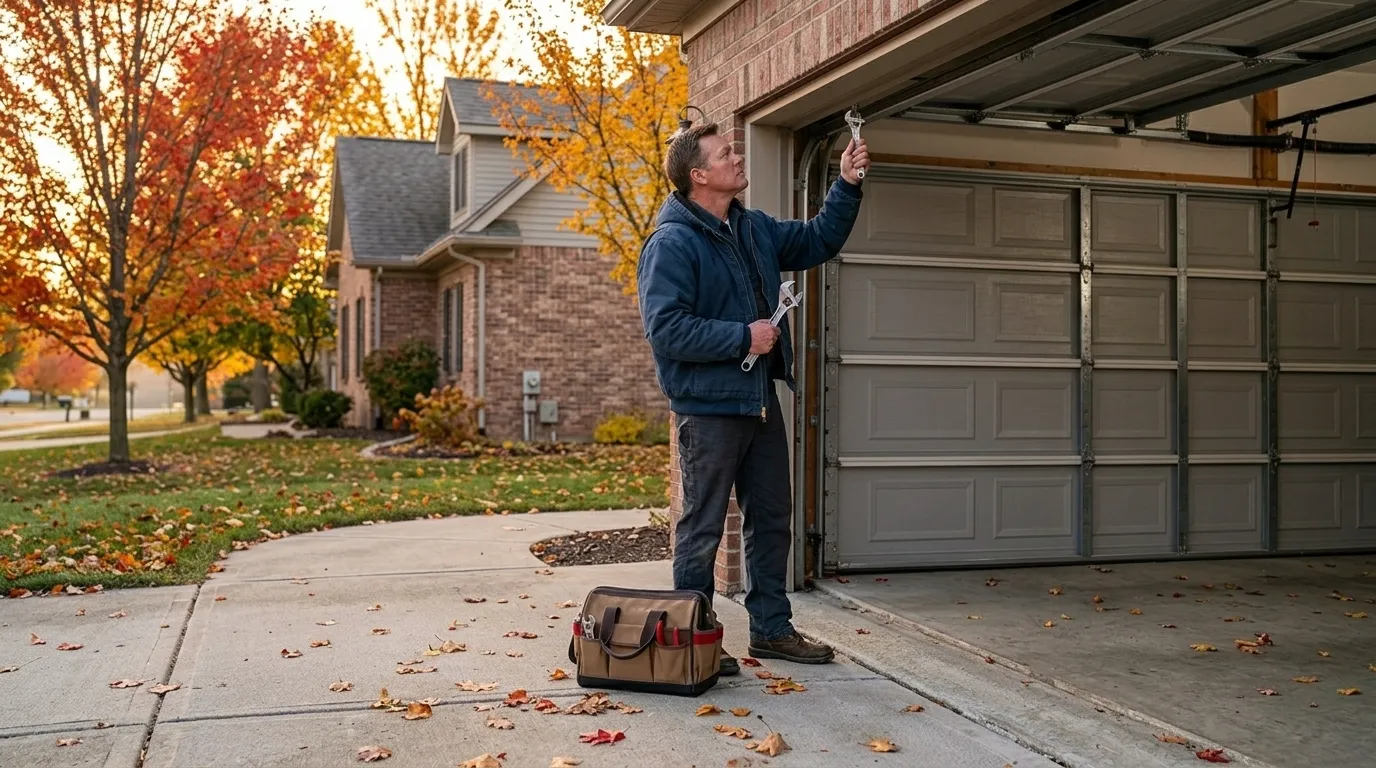
Olney's build year runs later than most of the Rockville service area - the typical house here dates to around 1986, while the wider area we cover skews toward 1970. That gap matters more than it sounds. A door installed in the mid-80s is likely on torsion hardware already, not the older extension-spring setups you still find on the pre-1970 stock closer to the city center. So the failure we see most in Olney isn't the ancient rusted extension spring - it's a torsion spring that's simply aged out after three decades of cycles, or an opener from that same build era finally giving up on its gears or circuit board.
We carry standard torsion spring sizes and universal opener parts on the truck, since that covers the bulk of what an 80s-era door needs. What we don't carry is anything obscure or discontinued - if a house here has had a door swapped since original construction (which happens), we diagnose on site rather than guess. The fix itself is usually straightforward: pull the broken spring, match the wind and wire gauge, reset the drums, and test the balance before we leave. Track and roller wear shows up too, especially on doors that have never been serviced.
Olney sits about six miles out from Rockville, so factor that into when we can get there - we're not running a branch out of Olney, we're driving from Rockville same as for every stop on this side of the service area. Once we're on site, most spring and opener jobs on a house this age run within a normal single visit; the hardware is common enough that we're not waiting on a special order for the spring size or the opener logic board.
What can add time is a door that's had mismatched parts installed over the years - a newer opener bolted to original-era track, for instance. We'll tell you straight if that's what we're looking at before we start, because diagnosing a mismatch takes longer than swapping a worn part for its match.
Tell us the age of the house if you know it, or when the door or opener was last replaced - for Olney specifically that helps us guess whether we're dealing with original-era hardware or a later swap, since 1986 median build year covers a wide range of what's actually installed. A quick description of the noise (grinding, a loud bang, a door that won't budge) narrows it further before we're even in the driveway.
We travel to Olney from Rockville, so we ask what we ask everywhere: is the car trapped inside, is the door open or shut, and is anyone able to be home for the call. None of that changes the price of the job, but it changes how we prep the truck.
Households in Olney run smaller in number but higher in income than the service area overall - 11,843 households here against $171,766 median income, compared with 322,833 households and $117,493 across the full area. That doesn't change how a spring breaks, but it does shape what people ask for: more requests for a full opener upgrade rather than a patch repair, more interest in quieter or better-insulated doors rather than a bare like-for-like swap.
The climate factor is the same one every town in this cold-band region deals with - cold, severe winters that stiffen steel and grease, and put extra load on a spring that's already near the end of its cycle count. A door that's marginal in October tends to fail in January. On 1986-era stock, that's often the first torsion spring the house has ever had, which is a normal, expected failure - not a sign anything was installed wrong.
The honest limitation: we don't stock every non-standard part, and a house in Olney that's had a custom or imported door installed at some point since 1986 can mean a parts search rather than a same-visit fix. We'll say so on site rather than force a part that doesn't match.
The other complication is diagnosing houses where the opener has been replaced more recently than the door track - common enough in a town where the original stock is now getting close to 40 years old, so some houses are on their second opener but the original track and drums. Matching a newer opener's force settings to older, slightly worn track takes a bit more time than a straight swap, and we tell customers that upfront rather than quote a flat time and miss it.
No - we work out of Rockville and drive to Olney for calls, about six miles each way. We don't run a branch or depot in Olney, so we ask upfront what's wrong so we bring the right parts on the first trip.
Torsion springs wear out on cycle count, not just age. A house built around 1986 is now old enough that its original spring has likely done tens of thousands of open-close cycles. Failing now is normal wear, not a sign of a bad install.
Often yes. Houses from this era are more likely to already have torsion springs rather than the older extension-spring setups common on pre-1970 stock closer to the city. We bring standard torsion sizes as the default for Olney calls.
The whole area sits in a cold, severe climate band, and cold stiffens both the steel spring and the grease in the opener. A spring that's already near the end of its life is more likely to snap in a hard winter stretch than in mild weather.
Call now or request a free quote - same-day service on most repairs, upfront written pricing.