Rockville, MD · Garage Door Service
Serving Aspen Hill's 1960s-70s housing stock from 4 miles away in Rockville. Torsion spring, opener and panel repair for original and replaced doors alike.
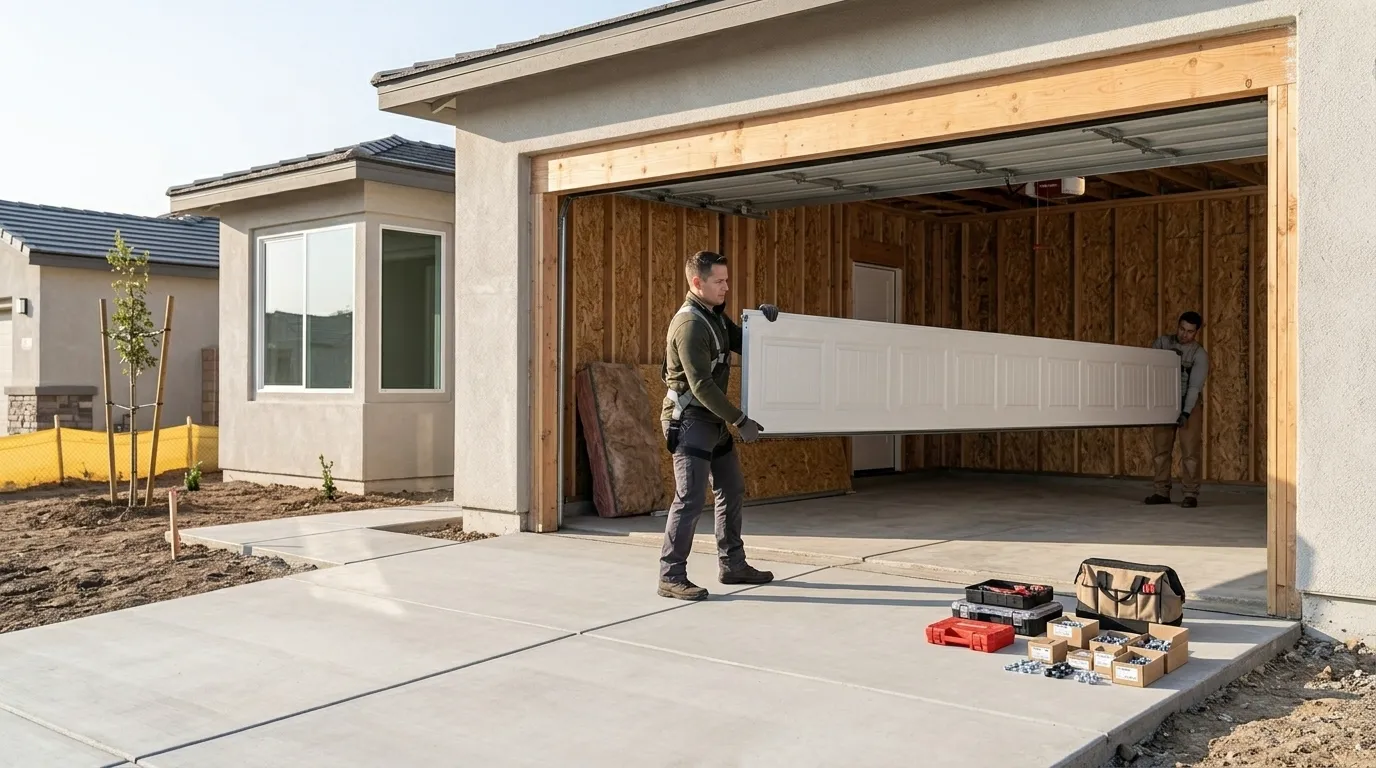
Aspen Hill's homes carry a median build year of 1970, which lines up with the wider stretch of the service area built out mostly in the 1960s and 70s. That matters more than it sounds like it should. A door installed when a house went up in 1968 is not the same animal as one installed in 2005 - different spring wind, different track gauge, often a single-layer steel skin with no insulation at all. We still find original torsion hardware on these houses, sized for panel weights that don't match what's sold off the shelf today. Add in a cold-and-severe climate band, and steel expands and contracts enough over a winter to loosen fasteners and stiffen up nylon rollers that were fine in October. None of this is dramatic. It's just wear that shows up as a door that starts sticking halfway, or a spring that finally lets go on the coldest morning of the year. The honest limitation here: if a door is original to a 1968 build and the spring has gone, we're not always going to find a drop-in match on the truck. Some of that older hardware takes an order, not a same-visit swap.
Because the build window across this stretch runs 1948 to 2014, you get real variation street to street even within Aspen Hill. The earlier end of that range means original wood-panel or single-skin steel doors, center-mounted torsion springs on a single shaft, and openers that predate any kind of rolling-code safety sensor. The later builds - anything from the 80s on - tend to have sectional steel doors with foam cores, dual springs, and openers with photo-eye sensors built in from the factory. What we watch for on the older end is cable fraying at the bottom bracket and springs that were never upgraded even after two or three opener replacements. On the newer end, the failures are more predictable: worn rollers, a sensor knocked out of alignment, a belt that's stretched. Neither era is worse to own, but they call for different diagnosis, and a repair quoted for one can miss the mark on the other if nobody looks at the actual hardware first.
Aspen Hill sits about 4 miles from Rockville, which is a short run for the truck - we're not treating it as an outlying stop. On the way we pass through or near Derwood (2 miles out), Redland (3 miles), and North Potomac and North Bethesda (both about 4 miles), so a call from this side of the area doesn't add much to the route. We don't run a depot or drop location in Aspen Hill itself - every job starts from Rockville, which is worth knowing if timing matters to you. We're not going to promise a same-hour arrival we can't back up; what we can say is the distance itself isn't the obstacle some homeowners assume it is when a company is based in another town.
Aspen Hill has roughly 17,425 households, with a median income around $109,026 - a bit below the wider service-area median of $117,493, which covers 322,833 households and 114,754 owner-occupied houses across all 62 named areas we work in. That gap is small but it shows up in the kind of calls we get: more repair requests than full replacements, more owners asking what a spring job costs before committing to a new opener. It fits the housing age too - a median build year of 1970 means most doors here have been repaired at least once already, and a lot of owners are choosing to keep fixing rather than replace, which is often the right call on a door that's structurally sound even if the hardware is dated.
No. We run out of Rockville, about 4 miles away, and Aspen Hill is a short trip on that route. We don't keep a depot or drop point here, so every job starts from the Rockville truck.
Sometimes. A lot of Aspen Hill homes date to right around 1970, and original torsion springs or track from that era don't always match what's stocked today. Common sizes we carry on the truck; less common setups may need an order.
Depends on the door. If the panels and track are sound and it's just a spring or roller issue, repair usually makes sense. If the steel skin is dented through or the track is bent past adjustment, replacement tends to cost less over time than repeated fixes.
Yes. This area sits in a cold-and-severe climate band, and steel doors and hardware feel it - springs stiffen, fasteners loosen, and older single-skin doors flex more in freezing temperatures. It's part of why winter is when a lot of these older doors finally show a problem.
Call now or request a free quote - same-day service on most repairs, upfront written pricing.