Rockville, MD · Garage Door Service
Garage door repair for Sandy Spring, a Rockville neighborhood 8 miles ENE of the center, where most houses date from the 1960s and 70s.
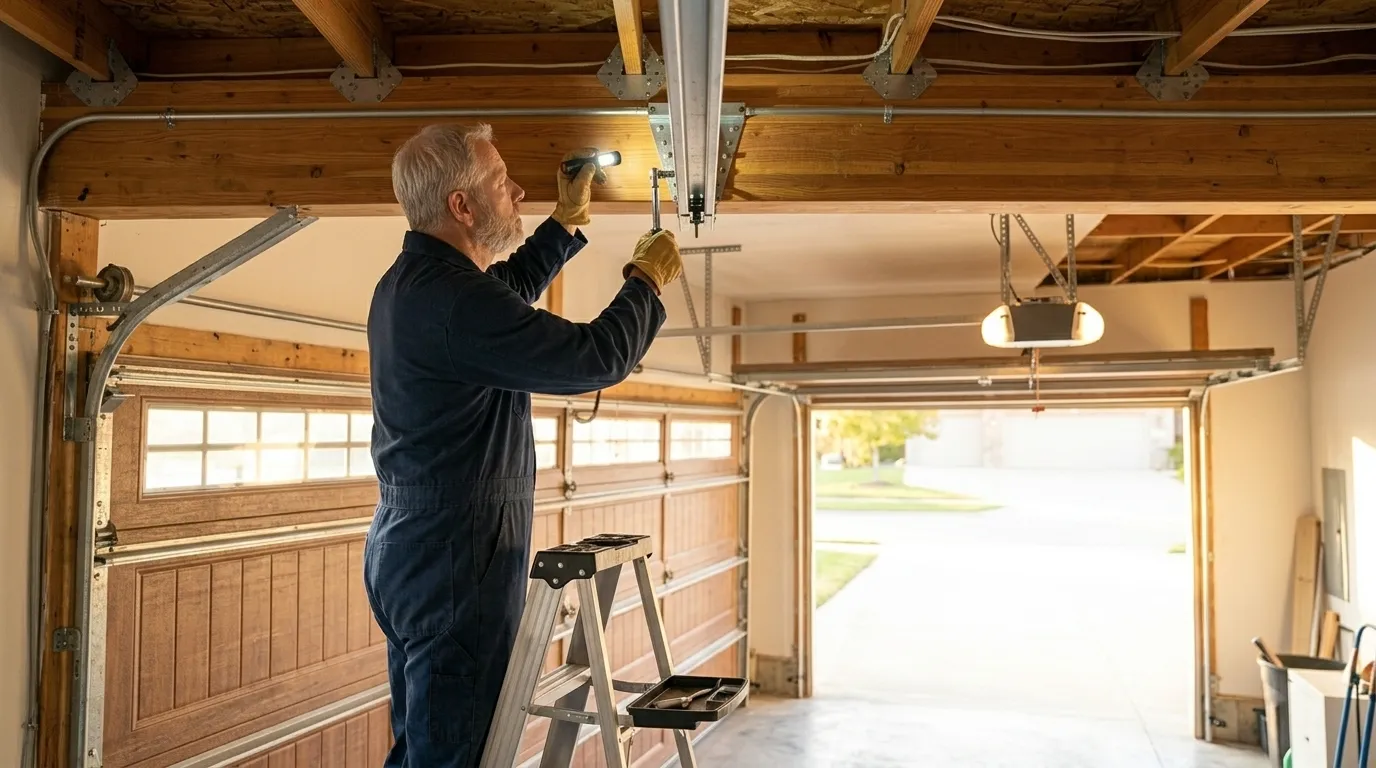
Sandy Spring sits inside a service area where the housing stock runs from 1948 up through 2014, but the median build year lands around 1970, and most of what went up nearby is 1960s-70s construction. That era means a lot of torsion spring setups on steel doors that have been repainted more than once, openers from the chain-drive generation that are now on their second or third motor, and tracks that were leveled for a house settling on original footings. We see broken torsion springs, worn rollers, and openers that finally give out after two decades of daily use. Cold-climate winters here are hard on nylon rollers and on lift cables that have gone dry, so a lot of the calls are seasonal - a door that worked fine in October and won't budge in January. We don't do custom architectural doors with imported hardware; if that's what you've got, we'll say so up front rather than take the job and guess at parts. For the standard steel or wood-composite doors that make up most of this housing era, we carry the springs, cables, and rollers sized for that generation of build.
Sandy Spring is about 8 miles east-northeast of the center of Rockville, out past Colesville and Ashton on the same side of the service area. It's one of 62 named areas we work across, and it sits closer to the outer edge of that footprint than the neighborhoods right around downtown. That distance matters mostly for scheduling - a truck routing through the eastern side of the service area on a given day can usually fold Sandy Spring into that run without a special trip. We don't have landmark-level detail for this specific pocket - no cross streets, no named subdivisions on file - so we're not going to invent them here. What we do know is the era of construction common to this stretch of the service area, and that's what actually determines the parts and labor a door repair needs, more than which corner it's on.
Because Sandy Spring is on the far side of the service area from the center, it helps to know roughly what's wrong before a truck is dispatched - a spring that snapped with a bang, a door that reverses on its own, an opener that hums but doesn't lift. That lets us bring the right spring size or the right sensor instead of showing up light. We work across a service area of over 322,000 households, and a good share of those are owner-occupied houses built in the same 1960s-70s window as this neighborhood, so the parts we stock are chosen for that generation of hardware, not for newer builder-grade doors. One honest limit: if your door is a custom import or a build we haven't seen the specs on, that first visit may turn into a parts-order trip rather than a same-day fix. We'd rather tell you that than promise a fix we can't deliver on the first call.
The service area that includes Sandy Spring has a median household income of $117,493, which tends to show up in the kind of upgrades we see on older doors - insulated retrofit panels added to a 1970s steel door, or a full opener swap to something with a battery backup, rather than letting a worn setup limp along. Cold-band winters mean uninsulated doors from that era lose a lot of heat through the panel seams, and that's often the first thing an owner asks us to address once the spring or opener gets fixed. We can't tell you what a specific street in Sandy Spring looks like - we don't have that level of detail on file - but the broader pattern across houses built in this window holds: original hardware nearing the end of its service life, doors that could use weatherstripping brought up to current standards, and openers that are due for replacement more on age than on any specific failure.
Most houses in this part of the service area were built in the 1960s or 70s, with the wider range running 1948 to 2014 and a median around 1970. That puts a lot of original or first-replacement doors and openers at or past their expected service life.
No - we don't have street-level or landmark data for this neighborhood on file, and we're not going to guess. What we can speak to is the housing era common to the area and the parts that era typically needs.
About 8 miles east-northeast of the center of Rockville. It's on the outer edge of our 62-area service footprint, which we account for when scheduling a truck for that side of the map.
Cold-climate winters are hard on nylon rollers, dry lift cables, and uninsulated panels, all common on doors from the 1960s-70s stock in this area. A door that worked fine in fall sometimes seizes up once temperatures drop.
Call now or request a free quote - same-day service on most repairs, upfront written pricing.