Rockville, MD · Garage Door Service
Rockville homes built between 1948 and 2014 carry original hardware sized for a different era. We install doors matched to this housing stock and this cold climate.
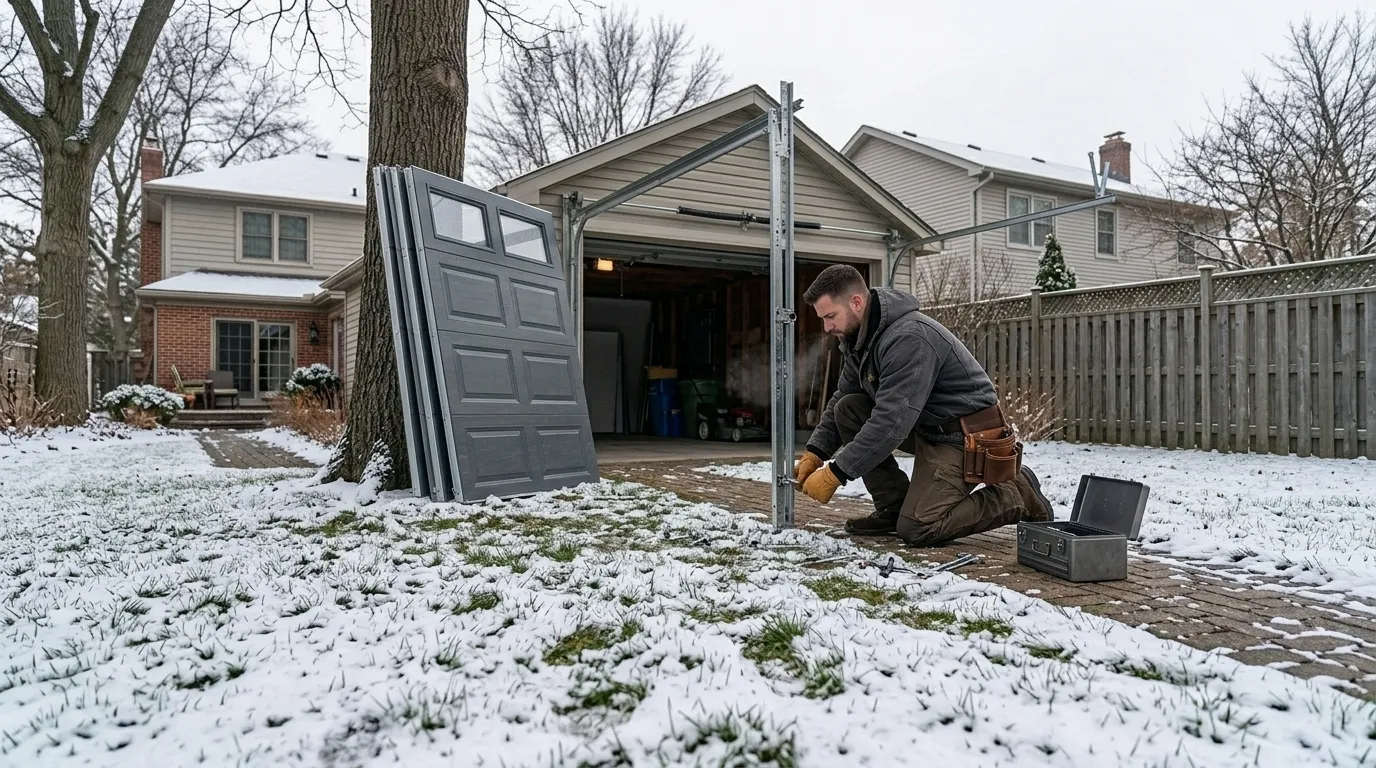
We start by measuring the opening against what's actually there, not what a catalog assumes. A lot of the houses we get called to in Rockville were built between 1948 and 2014, with the median landing around 1970, which means the rough opening, the track spacing, and the header clearance often don't match anything currently sold off the shelf. We pull the old door, check the jamb for square, and either special-order a size that fits the original framing or reframe the opening to take a standard door - whichever costs the owner less over ten years, not just on install day. For torsion setups from that era we replace the shaft, drums, and cable at the same time as the door, since running new panels on forty-year-old hardware just moves the failure point, not the failure. We set the new door's insulation rating for a cold-severe climate, which matters more here than in a milder zone, and we balance the spring tension by hand before we hand back the opener remote. One limitation worth saying plainly: if your opening needs a custom width or height, that section has to be special-ordered, and it won't go in the same day we quote it.
A door built for a 1960s or 70s tract house in Rockville was engineered around the cars, garages, and weather of that decade - narrower track gauge, lighter panel material, and hardware rated for a milder swing in temperature than what actually hits this area. Rockville sits in a climate band rated cold-severe, so steel panels here contract and expand through a wider range each winter than the door's original design accounted for. Over enough seasons that stress works loose the roller brackets, hairlines the panel seams, and throws the door out of the track alignment it shipped with. This isn't a defect - it's forty-plus years of thermal cycling on hardware that was never rated for it. Homes built later in that same 1948-2014 span fare a little better because later doors used improved seals and heavier gauge steel, but plenty of the original stock across Rockville's older sections never got upgraded, just repainted. That's the gap we're closing on an install: not just swapping a door, but putting in hardware rated for the actual winters this area gets, not the winters assumed when the house went up.
The Rockville service area covers roughly 322,833 households, with about 114,754 of those owner-occupied houses - a mix old enough that no two openings behave quite the same. Median household income here runs $117,493, which means we see more owners choosing insulated steel or wood-composite doors over the bare minimum, but that preference runs into the same framing problems as any other install: older jamb material that won't hold new fasteners without reinforcement, and headroom that's tight for a modern torsion spring assembly. We run the same install crew out to Derwood, two miles off, and to Redland, three miles out, along with Aspen Hill and North Potomac a bit further - and the framing quirks repeat across all of it, because the building era repeats. The complication isn't the door itself; it's matching new hardware to an opening that was framed under a code and a climate expectation from decades ago. Where the numbers don't work - where reframing costs more than the house is worth recovering - we say so instead of selling a door that will fight its opening for the next ten years.
The complaint we hear most starts the same way: the door worked fine in October, and by January it's binding halfway up, or the opener strains and reverses before it closes. That's cold-severe weather doing exactly what it does to panels and track built to older tolerances - metal contracts, the roller sits slightly off its original line, and the door starts fighting the track instead of riding it. On a house from the 1948-1970 range that's still running original hardware, this shows up almost every winter once the door passes a certain age, and it gets worse each season rather than resolving on its own. Some owners also notice the door looks fine but the opener's motor runs longer than it used to - that's the same binding, just caught by the machine instead of the ear. Neither of those means the opener is failing; it usually means the door and track have drifted out of the tolerance that era of hardware was built to hold, and it's a hardware-and-alignment job, not a motor replacement.
Cold-severe temperature swings cause steel panels and older track hardware to contract more than newer materials, throwing the roller alignment off just enough to bind. It's common in Rockville houses running original hardware from the 1960s-70s building wave, and it usually gets worse each winter until the track and rollers are replaced, not just lubricated.
Yes, but a custom width or height has to be special-ordered rather than pulled off the truck, so it won't go in the same day as the quote. A lot of Rockville houses from the 1948-2014 building span have openings that don't match today's standard sizes, and we measure for that before ordering.
Depends on the hardware underneath. If the track and torsion shaft are original and already out of tolerance, putting a new door on them just moves the failure point. We look at the whole opening, not just the panel, and tell you honestly when reframing costs more than the house will recover in resale.
Call now or request a free quote - same-day service on most repairs, upfront written pricing.