Rockville, MD · Garage Door Service
Burtonsville homes mostly went up after 1985, later than Rockville's 1970 median build year. We service Burtonsville's newer torsion and opener hardware from our Rockville shop.
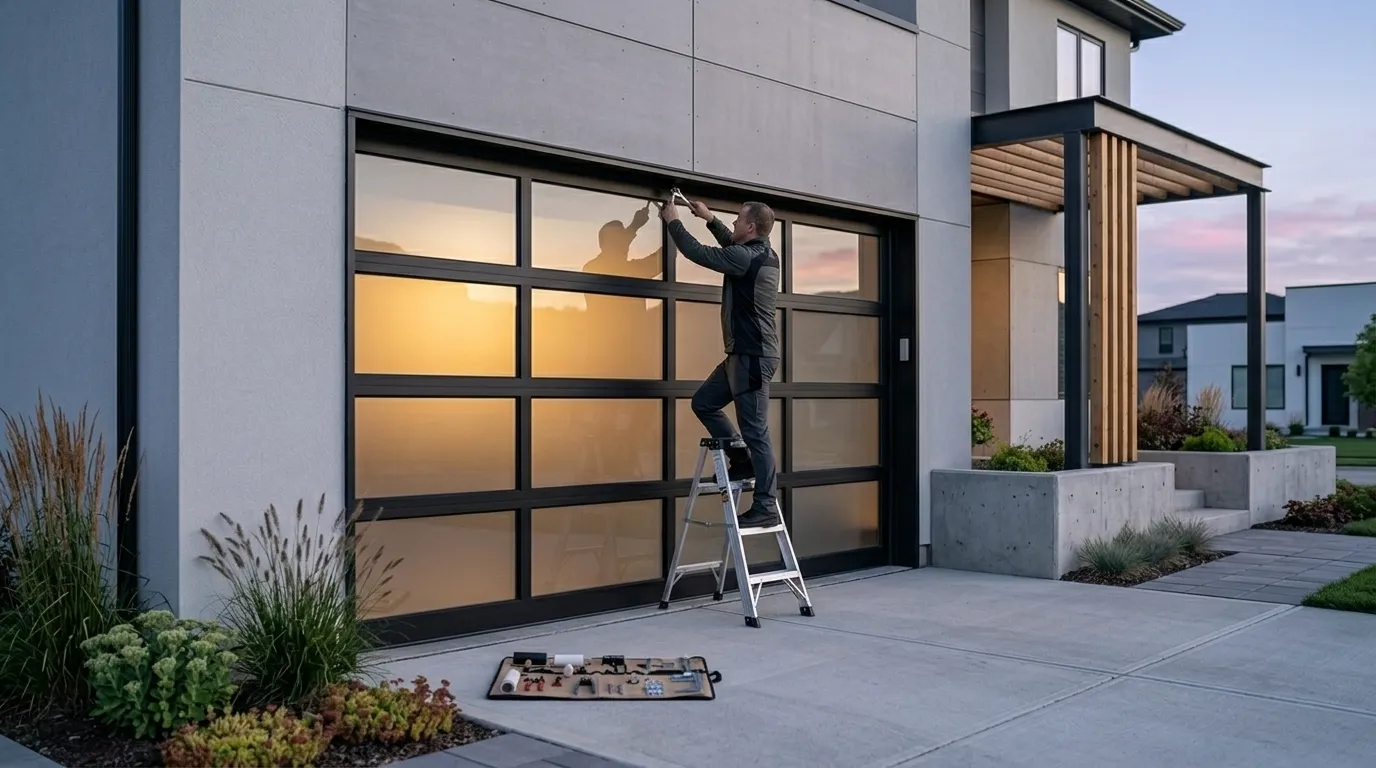
Burtonsville's housing stock runs newer than most of the areas we cover out of Rockville. The median home here went up around 1985, well past the 1970 median for the wider service area, which means you're mostly dealing with steel sectional doors on standard torsion springs rather than the older extension-spring setups we see on 1950s and 60s stock elsewhere. That's good news on parts availability - torsion hardware from the mid-80s onward is still in common sizes - but it also means the failure points are different. Openers from that era are further along in their service life than the doors themselves, so a common call here is a chain-drive unit that's simply worn out, not a spring that's failed. Circuit boards and logic units on openers installed in the 80s and 90s are past any realistic repair window; when one of those fails, replacement is the only real option, not a fix. We won't try to sell you a board swap on a 35-year-old opener when a new unit costs less than the labor to track down a discontinued part.
Not every block in Burtonsville dates to the same build wave. Streets closer to the older pockets nearer Colesville and White Oak can have homes from the 1960s mixed in with the newer construction that pushed the area's median up to 1985. On those older houses you'll still find original one-piece doors or early sectional models with narrower track and lighter-gauge springs than what's standard today. On the newer streets, doors are wider, taller in many cases, and built for heavier insulated panels, which means the torsion springs are wound for more weight. Mixing up parts between these two eras is the single most common mistake in a repair - a spring rated for a light 1960s door will burn out fast on a heavier insulated panel, and vice versa. We check the door's actual weight and track width before ordering anything rather than assuming the neighborhood's build year tells the whole story.
We run out of Rockville, about 12 miles from Burtonsville, so we're not sitting in the neighborhood waiting on calls. That distance means we plan the route in before we commit a time window rather than promising to be there in minutes. Burtonsville sits among a cluster of communities we cover on the same swing - Colesville, White Oak, and Fairland are all within a few miles - so a truck already headed this direction can often work a Burtonsville job into the same trip. We don't keep a satellite location here and won't claim otherwise; every job starts with a drive from Rockville, and we're upfront about that when we schedule.
Burtonsville has roughly 2,976 households, a market small enough that it doesn't have its own separate identity in broader housing counts but distinct enough in build pattern to matter for door work. Median household income here runs around $130,000, higher than the $117,493 median across the wider service area, and that shows up in the doors themselves - more insulated steel and composite panels, more openers with battery backup and rolling-code security than you'd find on the older 1960s stock closer to the city center. The area sits in the same cold-climate band as the rest of the region, so winter cold-stiffened springs and ice-swollen weatherstripping are still the seasonal calls we get, but the housing age here means fewer of the brittle, decades-old springs that snap outright in Rockville's oldest neighborhoods.
No. We run out of Rockville, about 12 miles away, and drive out for every job. We don't keep a depot or staff stationed in Burtonsville, so we schedule around the drive rather than promising an on-the-spot arrival.
Generally, yes. Burtonsville's median home was built around 1985, well after the 1970 median across our wider service area, so you're more likely to have standard torsion hardware and insulated steel panels than the older extension-spring doors common in the region's 1950s and 60s housing.
Worn-out chain-drive openers and cold-stiffened torsion springs. The area's newer housing stock means fewer of the brittle original springs we see on much older doors, but openers installed decades ago are reaching the end of their working life.
If the motor and drive are sound, sometimes. But if the logic board has failed on an opener from the 80s or 90s, we won't chase a discontinued part - a new unit costs less than the labor to hunt one down, and we'll say so plainly.
Call now or request a free quote - same-day service on most repairs, upfront written pricing.