Rockville, MD · Garage Door Service
Serving Capitol Heights from Rockville, 20 miles out. Doors here mostly date to 1967 - older torsion hardware and steel panels are the common calls we see.
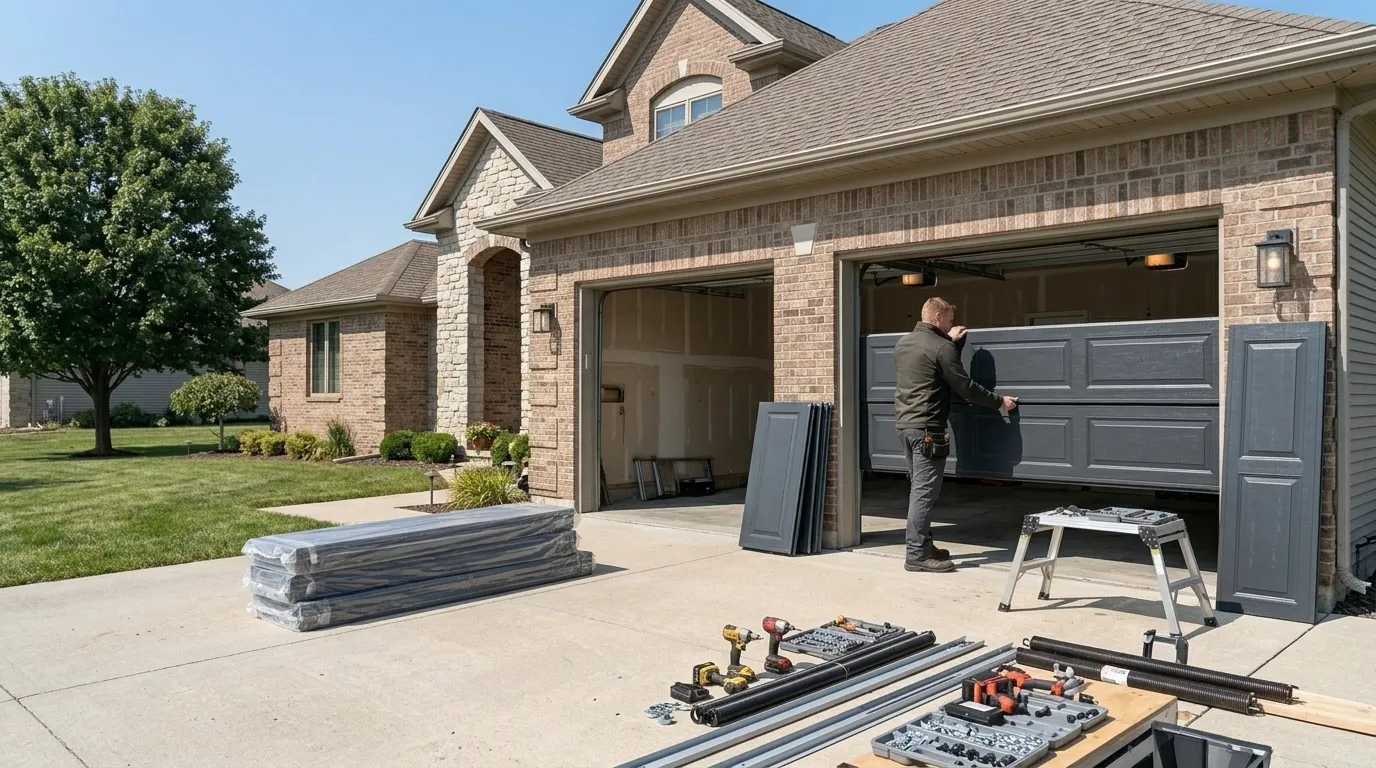
Capitol Heights homes were mostly built around 1967, which puts this neighborhood on the older edge of what we see across the wider Rockville Garage Door Pros coverage area (that broader area spans houses built anywhere from 1948 to 2014, with a median around 1970). A 1967 house usually means the original garage opening was sized for a single steel door on side-mounted torsion springs, not the wider centered-torsion setups builders started using in the 1980s and later. If your door and track still look like factory-original, the spring is probably undersized for today's heavier insulated replacement panels, and the rollers are steel, not nylon. That combination is what we get called out for most in a neighborhood this age: a spring that finally lets go, or a track that's been quietly bent out of true for years because nobody re-shimmed it after the first sag. None of that is unusual for a house this old - it's just what the hardware looks like at 55-plus years, and it's worth knowing before you call, because it changes whether a repair is a quick fix or a full spring-and-cable swap.
Capitol Heights doesn't have much of an older-vs-newer split within its own blocks - with roughly 1,256 households and a build year clustered around 1967, most of the doors here are aging together rather than showing the mix you'd find in a newer subdivision. That's different from a lot of the rest of our coverage area, where housing stock runs anywhere from the late 1940s up through 2014, so a single street can have a 1950s one-piece door next to a 2010s insulated sectional. Here, the contrast isn't street to street, it's between the original door still hanging on and whatever's been swapped in over the decades since. If your neighbors on either side had their door replaced in the last ten or fifteen years and yours hasn't, you're likely looking at the last original unit on the block, and parts for it - especially matching springs or track sections - are the kind of thing we bring with us rather than expect to find at a counter nearby.
We run out of Rockville, and Capitol Heights is about 20 miles from there, so we're not a same-day walk-in operation for this area - we schedule the trip rather than treat it as a drop-by. That's the honest limitation: if you need someone standing in your driveway within the hour, we're not that. What we can do is plan the job properly before we leave the shop, which matters more here than it would somewhere closer, because a wasted trip for a missing part costs real drive time on both ends. When you call, we ask enough about the door - age, size, whether it's a broken spring versus something binding in the track - to load the truck right the first time, especially given how many doors out this way are still running original 1960s-era hardware that isn't sitting on a shelf at every supply house.
Median household income in Capitol Heights runs about $91,938, noticeably below the $117,493 median across the broader service area we cover out of Rockville, which spans 322,833 households and 114,754 owner-occupied houses. That gap matters for a practical reason: replacement decisions here tend to lean toward a solid repair over a full door swap more often than they might in a higher-income pocket of the coverage area, and we work with that rather than push a new install when the existing door and opener still have life in them. With around 1,256 households in the area and most of the housing dating to the mid-to-late 1960s, the openers we find are frequently second or third replacements already, chain-drive units bolted to the original 1960s door and track. The climate here is the same cold-and-severe band the rest of our coverage area deals with, so cold-weather spring fatigue and stiff nylon rollers are common regardless of income level - that part doesn't change house to house.
No. We're based in Rockville and travel to Capitol Heights, about 20 miles away. We don't keep a local depot here, so we schedule visits rather than offer walk-in or immediate same-hour service for this area.
Most Capitol Heights homes date to around 1967, so a lot of the original garage doors here still run side-mounted torsion springs and steel rollers - hardware that predates the centered-torsion, nylon-roller setups common in houses built after the 1980s.
No. Plenty of doors from the 1960s still have sound panels and tracks even after a spring failure. We'll tell you honestly when a repair makes more sense than a full replacement, and when the door's actually past that point.
We load based on what you tell us about the door's age and size before we make the drive, since parts for original 1960s hardware aren't always something we can grab on the way. That's part of why we ask more questions up front for a trip this distance.
Call now or request a free quote - same-day service on most repairs, upfront written pricing.