Rockville, MD · Garage Door Service
North Potomac homes mostly date to the late 1980s, not the 1960s stock common closer to Rockville. We travel 4 miles out to work on the newer doors and openers that come with that.
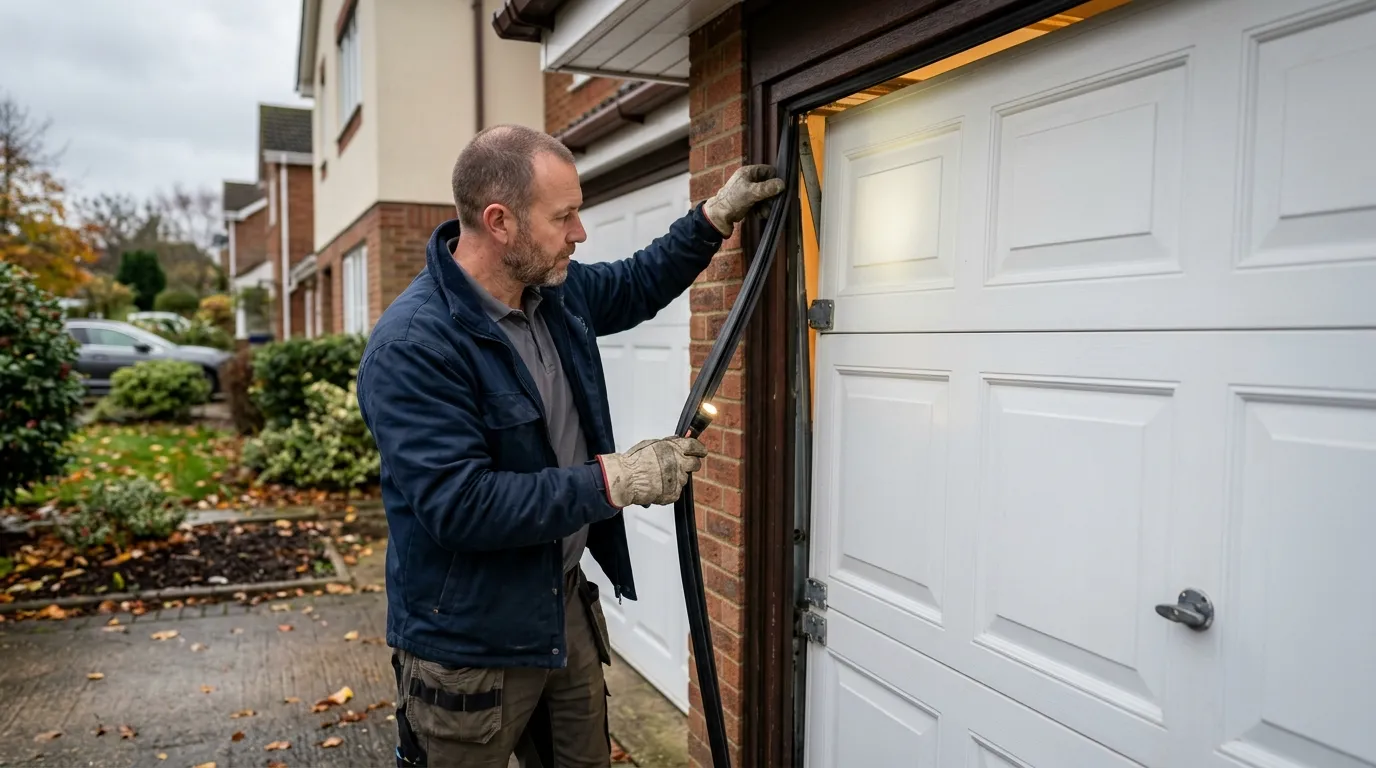
North Potomac's median home was built around 1988, which puts most garage doors here a full generation newer than what we see on the older streets closer to Rockville, where the broader service area's median build year sits back at 1970. That gap matters. A house from 1988 typically came with a steel sectional door on an extension or torsion spring system that's still recognizable parts-wise, not the older one-piece or oddball hardware you find on 1960s construction. The failures we get called out for here tend to be the ordinary wear items: a worn extension spring, a stripped gear on a chain-drive opener, a bent track from a car bumping it. What we don't see as much of in this area is the exotic hardware replacement work that older stock demands, because most of these doors and openers are still in a mainstream range that gets serviced, not replaced outright. That's good news for repair cost. The one caveat: some original builder-grade openers from the late 80s and early 90s are old enough now that a control board repair isn't worth it next to a new opener, and we'll tell you straight when we think that's the case rather than billing for parts that won't hold.
Even within North Potomac, build years spread out enough that it's worth knowing which decade your section went up in, because the failure pattern follows the construction date more than the street name. The area's own median lands around 1988, well ahead of the 1970 median for the wider Rockville service territory covered by 62 named communities, most of which built out in the 1960s and 70s. If your section is closer to that median, expect a door and opener that are original or close to it, with wear showing up as sagging rollers, a spring that's lost tension, or a photo-eye sensor knocked out of alignment. Streets built more recently tend to bring newer opener electronics, which fail differently, usually a logic board or remote sync issue rather than mechanical wear. We don't have a lot list of exact streets or subdivisions to point to, so we go by what we find on the door itself: the manufacturer stamp and spring type tell us more about age than the block does. What we can say with confidence is that this area's housing profile is newer than the region's average, and that shapes which parts we bring on the truck for a North Potomac call versus one closer in.
We run out of Rockville, about 4 miles from North Potomac, so this isn't a satellite office or a second location, it's a short drive on our end. We don't keep a depot in North Potomac and won't claim one. What that means practically is that scheduling works the same as anywhere else in our coverage area: we route the truck out here as part of the day's calls rather than staging separately. North Potomac sits among a cluster of communities we also reach, including Derwood, Redland, and Travilah nearby, so a North Potomac stop often lines up with other jobs on the same trip. We're not going to promise a same-day window here that we haven't confirmed, since that depends on the day's schedule, not the mileage. Four miles is a short leg for us, not a long one, but we'd rather be honest that travel time isn't the bottleneck for most repairs, parts availability and the actual diagnosis are.
North Potomac has about 8,198 households, and the median household income here runs about $186,438, noticeably higher than the roughly $117,493 median across the full 322,833-household service area we cover from Rockville. That income gap tends to show up in the kind of doors we're asked to quote: more requests for insulated steel doors and quieter belt-drive openers, fewer calls where cost is the deciding factor over door quality. It doesn't change the physics of a broken spring or a misaligned track, but it does shape what people choose when it's time to replace rather than repair. The region overall sits in a cold, severe winter climate zone, and that affects every door here regardless of income level: weatherstripping and spring lubrication matter more when temperatures swing hard, and a spring under extra cold-weather tension is more likely to snap on the coldest mornings of the year. That's true whether the house went up in 1970 or 1988, the newer build year just means the rest of the hardware around that spring is in better shape when it happens.
No. We work out of Rockville, about 4 miles away, and travel to North Potomac as part of our regular service area. There's no local depot here, just a short drive from where we're based.
Generally newer. The area's median home dates to around 1988, later than the 1970 median across our wider coverage territory, so doors and openers here tend to use more mainstream, serviceable hardware rather than older or discontinued parts.
Cold affects spring tension and lubrication regardless of the opener's age. This region sits in a severe cold climate band, and a spring under extra tension from low temperatures can snap even on a door that's only 20 or 30 years old.
Sometimes not. If the control board is failing on an opener that old, we'll often recommend replacement instead of a repair that won't last, especially since newer openers run quieter and more reliably for a similar cost to a board swap.
Call now or request a free quote - same-day service on most repairs, upfront written pricing.