Rockville, MD · Garage Door Service
Serving Spencerville's 1970-era homes from Rockville, 10 miles out. We know the torsion hardware and steel doors this build era carries.
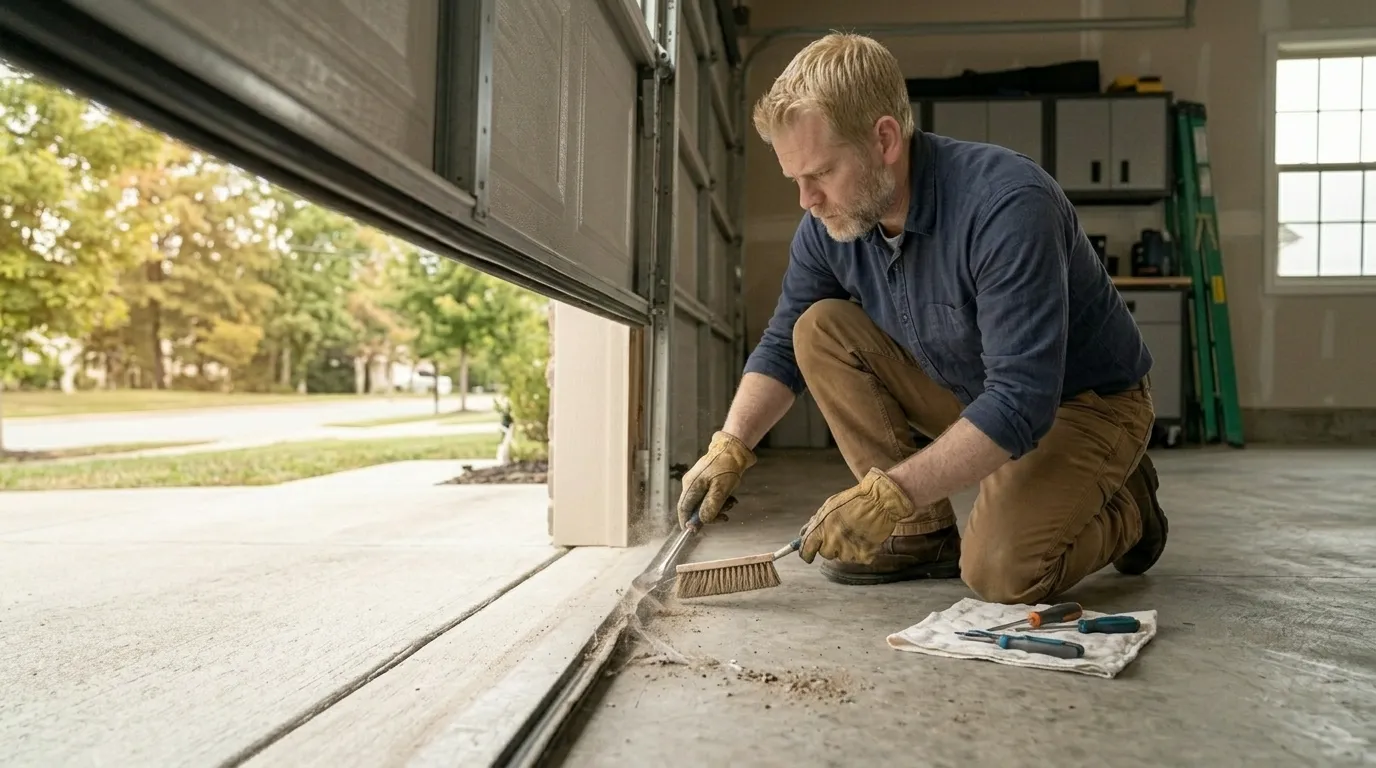
Spencerville's housing sits at a median build year of 1970, which puts most garage doors here squarely in the era of steel sectional doors on torsion springs rather than the older track-and-pulley setups you find in pre-war neighborhoods. That's actually good news for repair work - torsion spring sizing and standard 7-foot track are well documented and parts are easy to source, unlike the one-piece tilt-up doors from the 1950s that show up closer to Rockville's older core. The failure points we see most in a 1970-built house are predictable: the spring itself, worn rollers on the original track, and openers that were swapped once already in the 1990s or 2000s and are now on their second or third life. With only 437 households in this area, we're not describing a sprawling subdivision with dozens of builder variations - it's a tighter, more consistent stock, which makes diagnosing a common fault faster once we're on site. The one thing that doesn't change with build year is Maryland's cold-weather swing: a torsion spring that's tired will usually snap on the first hard freeze, not in July.
Because Spencerville's median build year is 1970, you won't find much pre-1960 stock here the way you might closer to the city center. What you will find is a narrower band of ages - most doors installed within a decade or two of that median, meaning steel panel doors, extension or torsion springs depending on the builder, and openers that have already been through at least one replacement cycle. A newer door on the same street might have a different spring count or a different opener mount entirely if a prior owner upgraded after a break. That's worth mentioning up front, because a repair quote on a 1970 door and a repair quote on its neighbor's 2005 replacement can look nothing alike even though they're 50 feet apart. We won't guess which one you have over the phone - the honest answer is we need to see the spring gauge and track width in person before we quote a repair.
We run out of Rockville, and Spencerville sits about 10 miles from there - close enough that a scheduled call doesn't turn into a half-day wait, but far enough that we ask for a real address and a description of the problem before we load the truck, so we bring the right spring size or roller stock on the first trip instead of a second one. We don't have a depot in Spencerville itself, and we're not going to claim a response time we can't back up for a stop this far out. What we can say is that Spencerville falls inside our regular coverage from Rockville, alongside Sandy Spring and Ashton-Sandy Spring nearby, so it's a run we make often, not a special trip.
At 437 households, Spencerville is a small pocket compared to the wider Rockville service area's roughly 322,833 households and 114,754 owner-occupied houses. That smaller number matters for door work: fewer total houses means less variation in what we'll find behind the panel, and it means word travels - if three houses on the same road all had the same builder-installed door, a fourth is often a repeat of the same fault. The severe cold winters this region gets put real stress on steel doors and their hardware regardless of build year, but a 1970-era door with its original torsion spring is the one most likely to fail on the first deep freeze of the season, simply because that spring has had five decades of cycles on it already.
No. We run out of Rockville, about 10 miles away, and Spencerville is part of our regular coverage area. We don't operate a depot on-site, so we ask for your address and a description of the issue up front so the truck comes stocked for the job.
Probably not. Spencerville's housing has a median build year of 1970, which means most doors here run standard torsion spring and steel sectional hardware - parts that are still widely stocked, unlike the older one-piece doors you'd find in a pre-1950s neighborhood.
Even on the same street, one house may have its original 1970-era door and hardware while another had a full replacement at some point with a different spring count or opener. We quote after seeing the actual spring gauge and track in person, not off the build year alone.
Yes. This region gets severe cold winters, and a torsion spring that's already worn down from decades of cycling is far more likely to snap on the first hard freeze than in warmer months. It's the most common emergency call we get once temperatures drop.
Call now or request a free quote - same-day service on most repairs, upfront written pricing.